



All The Vaccines Canada Is Considering & How They're Doing Around The World
In the midst of a pandemic, the race to develop effective COVID-19 vaccines is ongoing.
The first two approved by Health Canada were introduced last year, but the country has continued to look for other candidates.
As it stands, officials are monitoring two others that have completed their final testing stages and three that are currently in phase three of clinical trials.
Editor's Choice: A Class-Action Lawsuit Has Been Proposed Against The Feds Over CERB Repayments
Pfizer
Efficacy: This COVID-19 vaccine is said to be 95% effective against the virus.
How does it work: The vaccine doses teach our cells to create a protein that can "trigger an immune response without using the live virus that causes COVID-19," according to Health Canada.
They say that when your body detects the novel coronavirus, it will be able to make antibodies to help fight the disease.
Side effects: The vaccine may cause minor reactions like pain at the injection spot, chills, tiredness and possible fever. There have been reports of anaphylaxis, though none have resulted in death at the time of publishing.
Dosage: One person will need two separate doses, the second one being administered 21 days later.
How it's doing around the world: Pfizer's vaccine has been authorized in over 40 countries worldwide, including Canada and the entire EU as of December 21.
Moderna
Efficacy: This is reported to be 94.1% effective in preventing the disease.
How does it work: The Moderna candidate is also an mRNA vaccine and operates the same way that the Pfizer one does, according to the Government of Canada.
Side effects: Major side effects like anaphylaxis have been reported, as well as minor ones could include pain at the site, tiredness, body chills and fever.
Dosage: Everyone will need two doses one month apart.
How it's doing around the world: Moderna has 38 countries listed on its website.
Novavax
Efficacy: This vaccine is reportedly 89.3% effective in preventing COVID-19 and is currently in phase three of trials.
How does it work: According to Novavax, the vaccine is "engineered from the genetic sequence of COVID-19."
Their technology creates a nanoparticle that stimulates the body to create antibodies against the virus. This artificial replicant of the virus is supposed to create better antibodies.
Side effects: From studies so far, mild pain, tenderness, fatigue and muscle aches have been reported, per UT Health.
Dosage: This one is also two injections, given about 21 days apart.
How it's doing around the world: While it has yet to be approved for use, so far Canada has secured 73 million doses of this vaccine. Countries like Switzerland, Australia, the U.S., and New Zealand have also been in talks with the company.
AstraZeneca
Efficacy: Research shows this one has 82% effectiveness with a three-month interval between both doses, per Bloomberg.
How does it work: The vaccine uses an adenovirus, the type that causes the common cold. It was altered to carry a part of the coronavirus but without causing sickness so that your body will recognize and attack it should it ever show up.
Side effects: Per the U.K. government, the
were pain and tenderness in the arm, headache, tiredness, muscle pain, feeling unwell, chills, fever, joint pain and nausea.
Dosage: This is another two-dose version. The second should be administered between four to 12 weeks.
How it's doing around the world: So far, it's been given emergency use authorization in several countries and has secured deals with the U.S., Canada, as well as the European and African Union.
Johnson & Johnson
Efficacy: This vaccine was found to be 85% effective in preventing severe cases of COVID-19, 66% effective against symptomatic disease and 100% against hospitalization or death.
How does it work: Just like AstraZeneca, it uses a modified adenovirus.
Side effects: Fatigue, headache, muscle aches and tenderness are potential side effects per Newsweek.
Dosage: Unlike many other candidates, this COVID-19 vaccine requires only a single dose.
How it's doing around the world: If it is approved for use here, Canada could expect to receive up to 38 million doses. Also, the company has agreed to give 500 million doses to countries that are of lower income through 2022.
Health Canada has a robust website with all the latest information on the vaccine and can answer any questions you may have. Click here for more information.
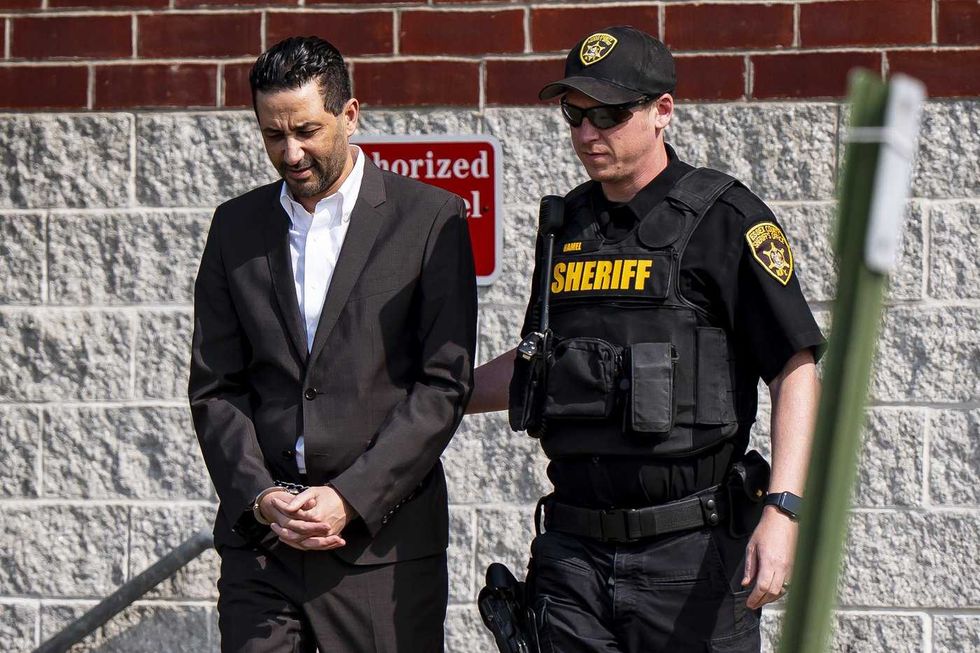 Luciano Frattolin is taken away in custody from the Essex County Court in Elizabethtown, New York on Friday, July 24, 2026. Luciano Frattolin charged with 2nd-degree murder and concealment of a human corpse.
THE CANADIAN PRESS/Christopher Katsarov
Luciano Frattolin is taken away in custody from the Essex County Court in Elizabethtown, New York on Friday, July 24, 2026. Luciano Frattolin charged with 2nd-degree murder and concealment of a human corpse.
THE CANADIAN PRESS/Christopher Katsarov Police officers open the back of a recovered truck during a press conference regarding Project 24K, a joint investigation into the theft of gold from Pearson International Airport, in Brampton, Ont., on Wednesday, April 17, 2024.
THE CANADIAN PRESS/Arlyn McAdorey
Police officers open the back of a recovered truck during a press conference regarding Project 24K, a joint investigation into the theft of gold from Pearson International Airport, in Brampton, Ont., on Wednesday, April 17, 2024.
THE CANADIAN PRESS/Arlyn McAdorey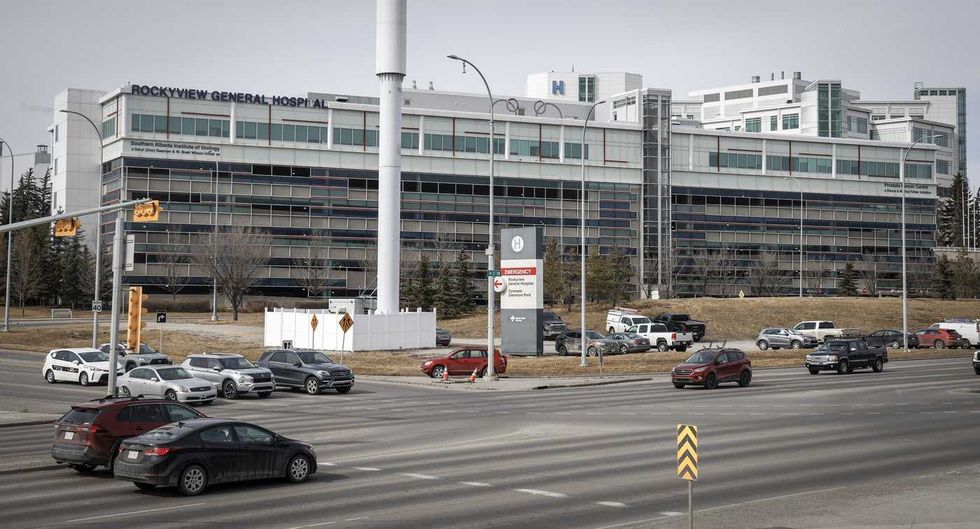 The Rockyview General Hospital is pictured in Calgary, Thursday, March 20, 2025.
THE CANADIAN PRESS/Jeff McIntosh
The Rockyview General Hospital is pictured in Calgary, Thursday, March 20, 2025.
THE CANADIAN PRESS/Jeff McIntosh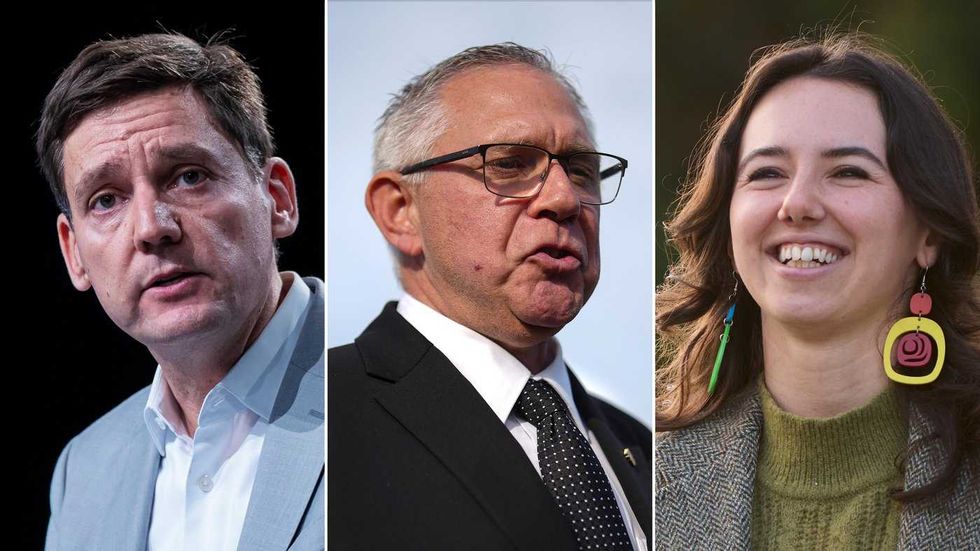 This composite image shows, left to right, B.C. NDP Leader David Eby in Vancouver, on April 13, 2026; B.C. Conservative interim Leader Lorne Doerkson, in Vancouver, on Sept. 22, 2026; B.C. Green Party Leader Emily Lowan in Victoria, on Sept. 23, 2026.
THE CANADIAN PRESS/Darryl Dyck, Rich Lam, Kevin Light
This composite image shows, left to right, B.C. NDP Leader David Eby in Vancouver, on April 13, 2026; B.C. Conservative interim Leader Lorne Doerkson, in Vancouver, on Sept. 22, 2026; B.C. Green Party Leader Emily Lowan in Victoria, on Sept. 23, 2026.
THE CANADIAN PRESS/Darryl Dyck, Rich Lam, Kevin Light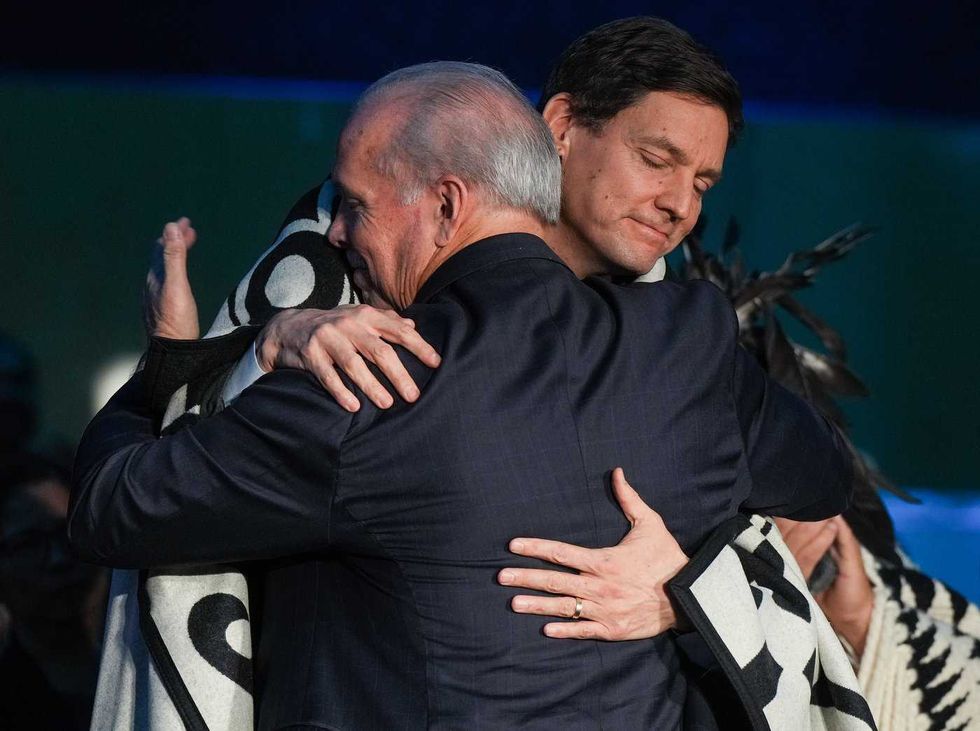 B.C. Premier David Eby, back, and outgoing premier John Horgan embrace during a swearing in ceremony where Eby became the province's 37th premier at the Musqueam Nation, in Vancouver, B.C., Friday, Nov. 18, 2022.
THE CANADIAN PRESS/Darryl Dyck
B.C. Premier David Eby, back, and outgoing premier John Horgan embrace during a swearing in ceremony where Eby became the province's 37th premier at the Musqueam Nation, in Vancouver, B.C., Friday, Nov. 18, 2022.
THE CANADIAN PRESS/Darryl Dyck