



Canada's population is experiencing a remarkable boom right now. Statistics Canada disclosed on June 16 that the country's population soared to an unprecedented 40 million people on Friday, with provinces such as Ontario and Alberta doing a lot of the heavy lifting.
The data was compiled using the agency's population clock, which models population growth in real-time using various factors such as birth rates, death rates, and migration data.
The impressive population growth solidified Canada's place as a leader amongst G7 nations, with its outstanding 2.7% percent growth rate representing its most significant expansion since 1957, when the country experienced a population surge of 3.3% due to immigration and the baby boom.
Of course, not all regions in Canada have experienced the same population growth. For example, the Northwest Territories has reported a decrease in population.
Below is a list of growth data for all the provinces and territories in Canada. The data highlights numerous factors, including the percentage that each province or territory's overall population represents in the country.
Ontario

Ontario's population growth chart
Population as of January 1, 2023: 15,386,407
Population growth from October 1 to December 31, 2022: 123,747
Rate: 0.8%
Share in the overall population of Canada: 38%
Alberta

Alberta's population growth chart
Population as of January 1, 2023: 4,647,178
Population growth from October 1 to December 31, 2022: 45,864
Rate: 0.1%
Share in the overall population of Canada: 11.7%
Quebec

Quebec's population growth chart
Population as of January 1, 2023: 8,787,554
Population growth from October 1 to December 31, 2022: 36,202
Rate: 0.4%
Share in the overall population of Canada: 22.2%
British Columbia

British Columbia's population growth chart
Population as of January 1, 2023: 5,399,118
Population growth from October 1 to December 31, 2022: 30,852
Rate: 0.6%
Share in the overall population of Canada: 13.6%
Manitoba

Manitoba's population growth chart
Population as of January 1, 2023: 1,431,792
Population growth from October 1 to December 31, 2022: 11,564
Rate: 0.8%
Share in the overall population of Canada: 3.6%
Saskatchewan

Saskatchewan's population growth chart
Population as of January 1, 2023: 1,214,618
Population growth from October 1 to December 31, 2022: 9,499
Rate: 0.8%
Share in the overall population of Canada: 3.1%
Nova Scotia

Nova Scotia's population growth chart
Population as of January 1, 2023: 1,037,782
Population growth from October 1 to December 31, 2022: 6,829
Rate: 0.7%
Share in the overall population of Canada: 2.6%
New Brunswick

New Brunswick's population growth chart
Population as of January 1, 2023: 825,474
Population growth from October 1 to December 31, 2022: 4,688
Rate: 0.6%
Share in the overall population of Canada: 2.1%
Newfoundland and Labrador

Newfoundland and Labrador's population growth chart
Population as of January 1, 2023: 531,948
Population growth from October 1 to December 31, 2022: 3,130
Rate: 0.6%
Share in the overall population of Canada: 1.3%
Prince Edward Island

Prince Edward Island's population growth chart
Population as of January 1, 2023: 173,954
Population growth from October 1 to December 31, 2022: 1,247
Rate: 0.7%
Share in the overall population of Canada: 0.4%
Yukon

Yukon's population growth chart
Population as of January 1, 2023: 44,238
Population growth from October 1 to December 31, 2022: 274
Rate: 0.6%
Share in the overall population of Canada: 0.1%
Nunavut

Nunavut's population growth chart
Population as of January 1, 2023: 40,692
Population growth from October 1 to December 31, 2022: 106
Rate: 0.3%
Share in the overall population of Canada: 0.1%
Northwest Territories

Northwest Territories's population growth chart
Population as of January 1, 2023: 45,493
Population growth from October 1 to December 31, 2022: -109
Rate: -0.2%
Share in the overall population of Canada: 0.1%
If the country's current growth trajectory persists, projections indicate that Canada's population could reach 50 million by 2043.
"This is an exciting milestone for Canada," Chief Statistician Anil Arora said in a news release. "It is a strong signal that Canada remains a dynamic and welcoming country, full of potential. As we head into Canada Day, this is certainly cause for celebration!"
A growing population might initially seem like good news for the country. However, it becomes less ideal when considering how unaffordable things have become. In April 2023, Statistics Canada reported a 4.4% increase in the cost of living, slightly higher than the 4.3% increase in March.
This marked the first time prices rose at a faster rate since June 2022. The primary drivers behind this overall price increase were higher rent and mortgage interest costs compared to the previous year.
 Luciano Frattolin is taken away in custody from the Essex County Court in Elizabethtown, New York on Friday, July 24, 2026. Luciano Frattolin charged with 2nd-degree murder and concealment of a human corpse.
THE CANADIAN PRESS/Christopher Katsarov
Luciano Frattolin is taken away in custody from the Essex County Court in Elizabethtown, New York on Friday, July 24, 2026. Luciano Frattolin charged with 2nd-degree murder and concealment of a human corpse.
THE CANADIAN PRESS/Christopher Katsarov Police officers open the back of a recovered truck during a press conference regarding Project 24K, a joint investigation into the theft of gold from Pearson International Airport, in Brampton, Ont., on Wednesday, April 17, 2024.
THE CANADIAN PRESS/Arlyn McAdorey
Police officers open the back of a recovered truck during a press conference regarding Project 24K, a joint investigation into the theft of gold from Pearson International Airport, in Brampton, Ont., on Wednesday, April 17, 2024.
THE CANADIAN PRESS/Arlyn McAdorey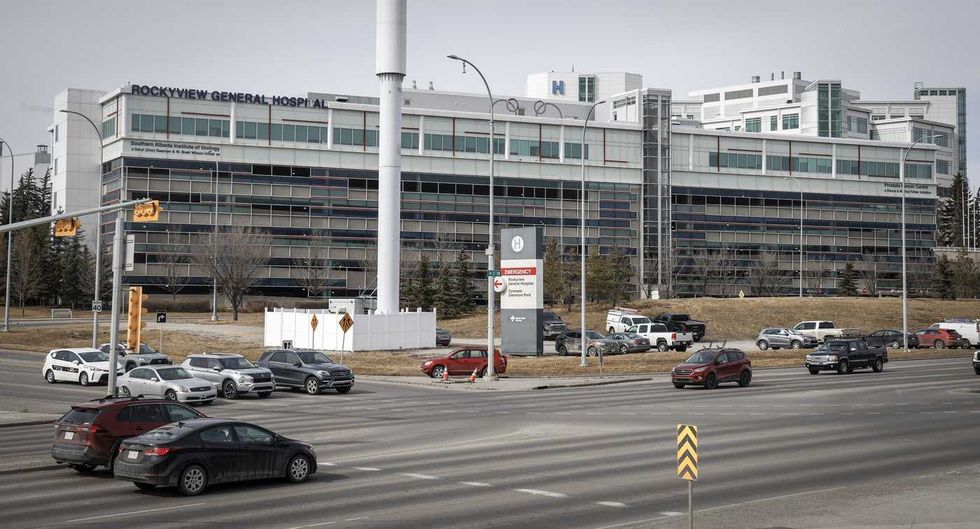 The Rockyview General Hospital is pictured in Calgary, Thursday, March 20, 2025.
THE CANADIAN PRESS/Jeff McIntosh
The Rockyview General Hospital is pictured in Calgary, Thursday, March 20, 2025.
THE CANADIAN PRESS/Jeff McIntosh This composite image shows, left to right, B.C. NDP Leader David Eby in Vancouver, on April 13, 2026; B.C. Conservative interim Leader Lorne Doerkson, in Vancouver, on Sept. 22, 2026; B.C. Green Party Leader Emily Lowan in Victoria, on Sept. 23, 2026.
THE CANADIAN PRESS/Darryl Dyck, Rich Lam, Kevin Light
This composite image shows, left to right, B.C. NDP Leader David Eby in Vancouver, on April 13, 2026; B.C. Conservative interim Leader Lorne Doerkson, in Vancouver, on Sept. 22, 2026; B.C. Green Party Leader Emily Lowan in Victoria, on Sept. 23, 2026.
THE CANADIAN PRESS/Darryl Dyck, Rich Lam, Kevin Light