



Canada's Cheapest Provinces With The Best Quality Of Life Were Ranked & Here's Where To Go
Looking to make a move in 2023?
It's not new information that the cost of living in Canada is on the rise. With the prices of everything from food to housing increasing, Canadians looking to make a move may be wondering where in the country their money will go the furthest.
MovingWaldo, which provides moving services for Canadians, has compiled a list of the cheapest provinces in Canada where you can spend less without having to sacrifice your quality of life.
The company classified 10 provinces in Canada from least to most expensive, based on their average cost of living.
Using data from sources like the Canadian Mortgage and Housing Corporation, the Canadian Real Estate Association, RateHub and Numbeo, the list ranked provinces based on their average monthly costs for a non-family household, including things like groceries, utilities and car insurance.
According to MovingWaldo, Newfoundland and Labrador is the province with the cheapest cost of living and best quality of life right now.
Excluding house prices, the average monthly cost for someone living in the province is $1,324. Residents can expect to pay around $70, on average, for a cell phone plan that includes unlimited talk, text and data, and $100 for water and electricity each month.
While grocery prices are on the high side here compared to other regions, at an average of $248.88 per month, the province makes up for this with inexpensive housing, with the average house and monthly rent prices at $299,950 and $783, respectively.
As for what life is like here, Maclean’s magazine has called Newfoundland and Labrador one of the top 10 friendliest cultures in the world.
"Even if Canada has the reputation of being welcoming and friendly, it is particularly true for Newfoundland and Labrador," says MovingWaldo.
Following Newfoundland is New Brunswick, where, while average house and grocery prices are slightly cheaper, the monthly cost of living is a bit higher at $1,755.15.
The province was also praised for having "several cities brimming with opportunities."
"Nurses, physicians and delivery and courier drivers are the most in demand jobs in New Brunswick," notes MovingWaldo.
It looks like Canadians felt the draw, with New Brunswick registering the largest net gain of people of any province in 2022, according to the U-Haul Growth Index.
The prairie province of Saskatchewan, which also has "great opportunities" for nurses and physicians, rounds out the top three, where average monthly costs total $1,706.72.
On the opposite end of the spectrum, B.C. was found to have the highest monthly costs, with a total of $2,887.33.
The figure doesn't include the price of housing, which sits at an average of $904,020.
Perhaps unsurprisingly, Ontario ranked just behind B.C. for the most expensive province on the list, with average house prices of $829,934, and monthly costs at $2,826.92.
Cheapest places to live in Canada
Here are all 10 provinces ranked from the cheapest to the most expensive cost of living:
- Newfoundland and Labrador
- New Brunswick
- Saskatchewan
- Manitoba
- Nova Scotia
- Prince Edward Island
- Alberta
- Quebec
- Ontario
- British Columbia
 Luciano Frattolin is taken away in custody from the Essex County Court in Elizabethtown, New York on Friday, July 24, 2026. Luciano Frattolin charged with 2nd-degree murder and concealment of a human corpse.
THE CANADIAN PRESS/Christopher Katsarov
Luciano Frattolin is taken away in custody from the Essex County Court in Elizabethtown, New York on Friday, July 24, 2026. Luciano Frattolin charged with 2nd-degree murder and concealment of a human corpse.
THE CANADIAN PRESS/Christopher Katsarov Police officers open the back of a recovered truck during a press conference regarding Project 24K, a joint investigation into the theft of gold from Pearson International Airport, in Brampton, Ont., on Wednesday, April 17, 2024.
THE CANADIAN PRESS/Arlyn McAdorey
Police officers open the back of a recovered truck during a press conference regarding Project 24K, a joint investigation into the theft of gold from Pearson International Airport, in Brampton, Ont., on Wednesday, April 17, 2024.
THE CANADIAN PRESS/Arlyn McAdorey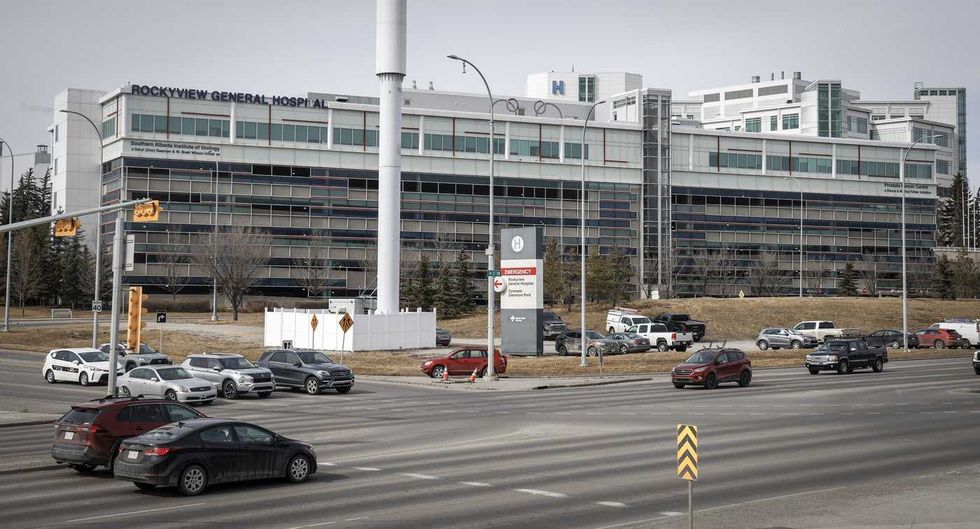 The Rockyview General Hospital is pictured in Calgary, Thursday, March 20, 2025.
THE CANADIAN PRESS/Jeff McIntosh
The Rockyview General Hospital is pictured in Calgary, Thursday, March 20, 2025.
THE CANADIAN PRESS/Jeff McIntosh This composite image shows, left to right, B.C. NDP Leader David Eby in Vancouver, on April 13, 2026; B.C. Conservative interim Leader Lorne Doerkson, in Vancouver, on Sept. 22, 2026; B.C. Green Party Leader Emily Lowan in Victoria, on Sept. 23, 2026.
THE CANADIAN PRESS/Darryl Dyck, Rich Lam, Kevin Light
This composite image shows, left to right, B.C. NDP Leader David Eby in Vancouver, on April 13, 2026; B.C. Conservative interim Leader Lorne Doerkson, in Vancouver, on Sept. 22, 2026; B.C. Green Party Leader Emily Lowan in Victoria, on Sept. 23, 2026.
THE CANADIAN PRESS/Darryl Dyck, Rich Lam, Kevin Light