On Wednesday Wakeham said he won’t comment on Ithaca’s “political things,” and that the company’s involvement in the province’s oil and gas sector “bodes well for our industry.”
His comments come nearly a week after provincial Energy Minister Lloyd Parrot did not answer questions from The Independent about what the PC government will do, if anything, in response to Ithaca’s takeover of Canadian oil company Suncor’s stakes in the Terra Nova, White Rose and West White Rose offshore oil projects.
Human rights advocates say the impending acquisition should be stopped, while a legal expert says the federal and provincial governments – as well as Suncor and provincial crown corporation OilCo – face legal risks if they fail to intervene.
“Gaza has been razed. Families have been erased, children have been starved and buried under rubble, and the West Bank is being cleared village by village,” local Palestinian solidarity group Palestine Action YYT told The Independent in a statement. “Newfoundlanders and Labradorians did not build an offshore industry to underwrite that. Not one barrel of our oil should pad the profits of anyone tied to apartheid and ethnic cleansing.”
Michael Bueckert, vice president of Canadians for Justice and Peace in the Middle East (CJPME) – one of the country’s leading voices speaking out against Israel’s war and occupation in the occupied Palestinian territories – calls Ithaca’s acquisition “unacceptable” and wants political leaders to step in.
“As the International Court of Justice has determined, our political leaders are obliged to avoid economic dealings with companies involved in Israel’s illegal occupation of Palestine,” he said in a statement to The Independent.
“This underscores the urgent need for Canada to intervene and impose comprehensive sanctions to stop all economic trade with those who profit from and facilitate Israel’s illegal settlements.”
According to the United Nations High Commissioner for Human Rights, Delek Group is providing “services and utilities supporting the maintenance and existence of settlements, including transport,” and of using “natural resources, in particular water and land, for business purposes.”
The Independent sent questions to Delek Group but did not hear back.
Carney needs to clarify commitment to sanctions
In September, Prime Minister Mark Carney committed to banning trade in goods with Israel’s settlements in the occupied Palestinian territories. “Settlements are illegal under international law,” he said at the time.
But details of Canada’s new sanctions have not yet been announced.
CJPME and others, including federal MP Heather McPherson – an outspoken critic of Canada’s relations with Israel amid what many argue amounts to Israel’s genocide against Palestinians – are calling on the Liberals to expand Canada’s sanctions against Israel and prohibit trade in services, too.
Heidi Matthews, an assistant professor of law at Osgoode Hall Law School in Toronto and an expert in international criminal law, says the Carney government needs to ensure its new policy is “comprehensive enough to capture things like federal and provincial procurement, and involvement in economic deals with corporations that in one way or another are engaged in illegal activity in occupied Palestine.”
The Independent reached out to Global Affairs Canada for comment but did not receive a response by the time of publication.
Legal risks for governments, corporations: Professor
Matthews says Wakeham’s characterisation of Ithaca and Delek’s ties to Israel’s occupation of Palestine as ‘political things’ is “inattentive to the realities of their commercial dealings,” which, she says, “cannot – according to the evidence that’s been documented by the UN database – be disassociated from violations of international law.
“It is well established that the occupation of the Palestinian territory, including the West Bank, is unlawful because it violates the Palestinian right to self-determination, and also because it amounts to the acquisition of territory by the use of force, as well as systemic racial discrimination and apartheid. All of this was found by the International Court of Justice (ICJ) in its 2024 advisory opinion on the question.”
In December 2023, South Africa instituted proceedings at the ICJ, accusing Israel of committing genocide against Palestinians and violating the 1948 Genocide Convention. The court isn’t expected to render a decision until 2029 or 2030. In 2024, however, the court issued an advisory opinion on the “legal consequences arising from the policies and practices of Israel in the Occupied Palestinian Territory, including East Jerusalem.”
The ICJ said Israel “has an obligation to bring an end to its presence in the Occupied Palestinian Territory as rapidly as possible,” and “must immediately cease all new settlement activity.”
The court also said states dealing with Israel have a legal obligation to “take steps to prevent trade or investment relations that assist in the maintenance of the illegal situation created by Israel in the Occupied Palestinian Territory.”
In August, the federal government warned Canadian businesses that, “Engagement in, or connection to, settlement-related activities presents significant legal, financial and reputational risks [which] arise in part because, under international law, settlements in the West Bank and East Jerusalem are not recognized as part of Israel’s territory.
“Activities may involve assets or resources subject to dispute and may expose businesses to increased scrutiny from investors, partners and civil society,” the advisory reads. “Businesses may also face disputes related to land, water, minerals or other natural resources associated with investments or transactions.”
Matthews points to the Supreme Court of Canada’s 2020 decision in Nevsun Resources Ltd. v Araya, which she says, “very clearly established that Canadian corporations can be held directly liable for violating these peremptory norms of international law, and that would include the right of the Palestinian people to self-determination.”
This means Suncor and Newfoundland and Labrador crown energy corporation OilCo could arguably face litigation, Matthews says. “But I do think the key question would be about whether or not the relationship between Suncor or OilCo. and Delek is too attenuated, by virtue of Ithaca in the middle. So whether doing business essentially with a company whose parent company is engaged in human rights violations – whether or not that’s a close enough link.”
Though states are legally bound to international law, including human rights law, states’ subnational jurisdictions could face legal consequences, too.
Matthews says Ithaca’s entry into the province’s oil sector raises “serious liability questions” for the Government of Newfoundland and Labrador, “in the sense that under international law […] the actions of [provinces or territories] are still attributable to the central government itself.
“Canada has several obligations under international law, including to prevent trade or investment relations that assist in the maintenance of the occupation, which would include but not be limited to the settlement economy,” she continues. “So the provincial government also shares in that obligation.”
‘Silence is complicity,’ says local Palestine solidarity group
When asked Wednesday if he had the power to stop Ithaca’s acquisition of Suncor’s stakes in the oil projects, Wakeham said it’s “not something that I’m looking at.”
The premier said he is “focused on making sure that we have what the world needs, and we wanna make sure that if, as long as the world has a demand for oil, that Newfoundland and Labrador is part of that solution.”
“For Wakeham to say that somehow the province is not bound by international law with respect to its connection to, or involvement in, these violations shows a basic misunderstanding of provincial obligations under international law.”
Palestine Action YYT, which has held rallies, marches and other protest actions since 2023, says the federal government’s actions so far are inadequate, but pale in comparison to the provincial government’s. “Ottawa talks about banning settlement trade. Premier Wakeham and Minister Parrott won’t even say the word. Silence is complicity, and we won’t be silent,” the group says in its statement.
“We will resist this deal, and we expect oil and gas workers and their neighbours will stand with us.” The group says it is planning a public meeting in the near future, details of which will be announced this coming week. “Everyone who refuses to bankroll genocide is invited.”
With files from Kenny Sharpe.
Copyright 2026, The Independent. All rights reserved.
Justin Brake, Local Journalism Initiative Reporter, The Independent.




 Le terrain de la maison à vendre au bord de l’eau à Sainte-Sophie.Valérie Guay | RE/MAX
 L’aire ouverte de la maison à vendre dans les Laurentides.Valérie Guay | RE/MAX
 La chambre principale et le bureau de la maison à vendre à Sainte-Sophie.Valérie Guay | RE/MAX
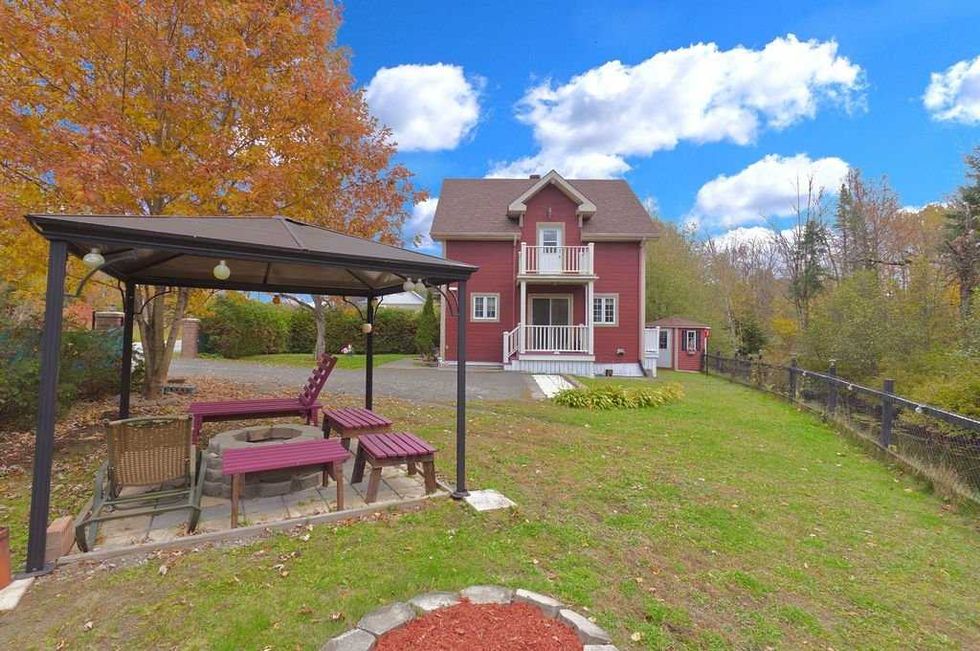 La cour de la propriété au bord de la rivière Abercrombie.Valérie Guay | RE/MAX
Ces «cheaps» du Québec révèlent leurs meilleurs achats à vie pour économiser et ça surprend
Ça va du bidet jusqu'à acheter...des poules?! 👀
Depuis plusieurs mois, l'inflation fait mal au budget alloué à la vie quotidienne et tu cherches donc sûrement un moyen de réduire les frais. Sur Facebook, le groupe Bienvenue chez les cheaps : Les Économes du Québec rassemble des personnes qui veulent économiser gros et elles ont récemment partagé des objets qui leur ont été très utiles pour sauver des sous sur le long terme.
Narcity a donc répertorié huit produits ou autres parmi les commentaires qui pourraient bien te servir pour baisser tes factures. En tout cas, cette liste vaut le coup d'œil, car il y a des choses surprenantes auxquelles tu n'aurais pas forcément pensé.
Un bidet
Plusieurs personnes ont indiqué avoir acheté ou prévoir investir dans « un bidet installé sur la toilette, à l’eau froide ».
Il serait super simple de le mettre en place soi-même, et cela aurait pour conséquence de réduire considérablement les dépenses en papier toilette.
« Il m'en a couté 78 $, mais je n'achète plus de papier toilette. En considérant qu'une personne en moyenne utilise près de 85 rouleaux par année, à environ 2 $ le rouleau en moyenne (peut être moins ou plus dépendant des deals, de la marque, etc), ça fait près de 170 $ pour une seule personne en économie (et c'est écolo) », a indiqué quelqu'un sur la publication.
Sinon, d'autres adhérents et adhérentes du groupe Facebook ont déclaré avoir investi dans du papier de toilette lavable.
Un gym maison
Peut-être que la fermeture des salles de sport durant la pandémie en a inspiré plusieurs, mais certaines personnes ont indiqué avoir investi dans un gym maison pour supprimer l'abonnement mensuel, afin de réduire les dépenses sur le long terme.
« Il m'en a couté un peu moins de 300 $. Un forfait de gym, c'est minimum 20 $ par mois (peut-être moins), donc 240 $ par an. Mon gym maison me suffira pendant plus que ça », est-il expliqué.
En plus, ça t'évitera de faire du sport avec d'autres personnes qui sentent la sueur, ce qui est un confort supplémentaire.
Un étendoir
Étant donné que les factures d'Hydro-Québec ne font qu'augmenter, réduire tes dépenses en électricité peut être un atout non négligeable pour faire des économies. Pour ce faire, certains et certaines utilisent simplement un séchoir à linge. Oui, rien de plus simple.
« J'ai quand même une sécheuse au cas où, mais je sauve beaucoup sur le long terme en électricité en laissant mon linge sécher à l'air libre, EN PLUS de promouvoir la longévité de mon linge », explique cette personne.
L'intérieur est bien sûr préférable l'hiver, tandis que l'été tu peux aussi accrocher une simple corde sur ton balcon et utiliser des pinces à linge.
Vinaigre
Parce que les produits de nettoyage sont parfois dispendieux, une autre alternative moins coûteuse est possible. Des personnes ont indiqué utiliser du vinaigre, du peroxyde ou encore du bicarbonate de soude pour faire le ménage. Non seulement c'est plus écologique, mais en plus, c'est plus économique.
« Pour les nettoyants maison je vie QU'AVEC le vinaigre. Je l'aromatise avec des fleurs/plante comestible et ça lui donne une bonne odeur en plus de n'avoir aucun danger d'empoisonnement pour mes p'tits », explique ce membre d'une famille.
Des sacs étanches en silicone
Chris.W Lot de 15 sacs de congélation réutilisables en silicone pour viande, fruits, légumes, collations à vendre sur Amazon.
Amazon
Il est vrai que d'investir dans des sacs Ziploc n'est pas très écologique, mais c'est aussi coûteux. Certaines personnes utilisent donc des sacs refermables étanches en silicone qui peuvent se réutiliser pendant plusieurs années.
« Je les ai depuis 6 ans [voir plus], finis les brûlures de froid et les sacs Ziploc ou sous vide », est-il écrit dans les commentaires.
Mentionnons que tu peux en trouver sous forme de lot sur Amazon pour une dizaine de dollars.
Diva Cup et culottes menstruelles
D'après une étude du gouvernement québécois de 2021 sur l’accès aux produits menstruels, le coût moyen annuel des principaux produits menstruels dans la province s'élève à 72,22 $ et 85,76 $ pour des serviettes et des tampons.
Notons que ces tarifs ont été calculés sur la base de l'utilisation de 25 unités par cycle, mais ces dépenses peuvent varier selon les différentes personnes et la combinaison de produits.
Plusieurs adhérents et adhérentes du groupe ont donc mentionné avoir troqué les tampons et les serviettes hygiéniques pour la coupe menstruelle, des culottes menstruelles ou encore des serviettes lavables. C'est économique ET écologique!
Une machine à pain
Hamilton Beach 29882C HomeBaker Machine à pain en vente sur Amazon.
Amazon
Étant donné que le coût de l'épicerie a monté en flèche dernièrement, tu pourrais économiser sur la valeur du pain en achetant une machine à pain. Par exemple, sur Amazon, tu peux en trouver pour une centaine de dollars.
« Beaucoup d’économie, j’y fais mes pitas, pains hamburger, pain blanc ou multigrains, pain aux raisins, etc, j’achète ma farine chez Mayrand à moins de 20 $, le sac de 20 kg », est-il précisé dans les commentaires.
À titre informatif, selon les estimations des prix fournis par les internautes, le prix moyen pour un pain de 500 grammes dans la province en 2023 est de 3 $.
Des poules
Certes, il faut un jardin et l'autorisation de la municipalité pour que cet investissement soit possible, mais sur le long terme, cela peut être un premier pas vers l'autosuffisance.
Certaines personnes ont pensé à acheter des poules pour les élever en liberté et produire des oeufs frais.
« Étant donné que les oeufs bio de poules élevées en liberté sont en moyenne 8 $ la douzaine, on va devenir rentables rapidement », est-il expliqué sur la publication.
Notons que d'après le site Internet du média Les affaires, en 2020, il fallait débourser entre 15 $ et 50 $ pour acheter une poule qui pondra en moyenne de 240 à 300 œufs par année. Par contre, tu devras aussi payer un permis urbain pouvant aller jusqu'à 50 $ en plus d'investir dans un poulailler pouvant coûter jusqu'à 6 000 $ en fonction du nombre d'animaux dans l'habitacle.