



Daylight Saving Time Ends Soon & Here's Why 2022 Might Be The Last Time We 'Fall Back'
The time has come! 🕑
The weather is getting colder and the days are getting shorter, which means it’s almost time to set your clocks back by an hour with the end of Daylight Saving Time.
If you're not a fan of the bi-annual time change then you'll be happy to hear this may be the last time you'll ever have to change your clocks in November. That is, assuming you live somewhere where they still do it.
Several states and provinces have laws ready and waiting to kill the time-changing habit for good, but they all rely on a few U.S. lawmakers to pull the trigger first.
As we get closer to the end of daylight saving time, keep in mind that these time changes can affect your mood and body so it's best to prepare yourself ahead of time.
Here's what you need to know before Daylight Saving Time ends on November 6.
When does daylight saving time end in 2022?
Daylight saving time started on March 13 and ends on Sunday, November 6 at 2 a.m. ET.
Don’t forget to change your clocks before you go to bed the night before or you'll be confused in the morning.
If you're using your phone as your alarm clock then it will automatically adjust the time for you.
Your clock will tick over from 1:59 a.m. to 1:00 a.m. when the change happens.
Is it daylight savings time or daylight saving time?
It's daylight saving time. No extra S!
What states are getting rid of daylight saving time?
While we've heard it before, this could very well be the last time we’ll have to set our clocks back.
In March the U.S. Senate passed the Sunshine Protection Act that would make daylight saving time the new permanent standard time, effective November 5, 2023.
The House of Representatives must still pass the bill and then it will go to President Joe Biden for final approval.
Daylight saving time has been in place in almost all U.S. states since the 1960s after it was first tried in 1918.
Since 2015, about 30 states have brought in legislation to end having to change clocks twice a year, as reported by Reuters. However, those states are waiting to make the change all at once.
Once the new change goes into effect, it won't change things for Hawaii and Arizona as those two states don't observe daylight saving time. Same goes for American Samoa, Guam, the Northern Mariana Islands, Puerto Rico and the U.S. Virgin Islands.
Would the changes also happen in Canada?
It's not just Americans who are waiting for the change to become permanent; Canadians are also eager to stick to daylight saving time year-round.
A couple of provinces have made this very clear.
In 2019, B.C. passed legislation to make the switch as soon as Oregon, California and Washington do the same. Clearly it's something many people in the province are keen about as 93% of people who took part in an online survey said they were on board with the change.
Over in the east, Ontario agreed to do the same if the state of New York and Quebec also make the change.
While most of Canada observes the bi-annual clock change, some communities don't.
Most of Saskatchewan, Yukon and parts of B.C., Ontario and Quebec don't observe daylight saving time.
How should you prepare for the time change?
The end of daylight saving time does not disrupt your sleep as much as the beginning of DST in March. If you get up at a specific time each day, you'll actually get to sleep in longer because you're gaining an extra hour in the middle of the night.
However, the U.S. Sleep Foundation says the time change can still affect circadian rhythm and people can struggle to get their sleep back on track for up to a week after falling back.
Its website lists a few tips on how to best prepare yourself for the switch to standard time, including going to bed at your usual time the Saturday night before clocks fall back and setting your alarm for your normal wake-up time on Sunday morning.
What do sleep experts have to say about the permanent change?
There are many reasons why people are fed up with having to change their clocks twice a year and want it to come to an end.
When it comes to sleep experts, there are mixed reviews on what's the right way to go about it.
The American Academy of Sleep Medicine agrees that the bi-annual clock changes need to go, but says the government should adopt year-round standard time instead of the other way around.
The academy's explanation is that standard time is more "closely associated with humans' intrinsic circadian rhythm" and interrupting that rhythm with DST has been linked to risks of obesity, cardiovascular disease and depression.
Other experts say daylight saving time is actually better for a number of reasons, including that it's tied to more exercise in children, as reported by Science News.
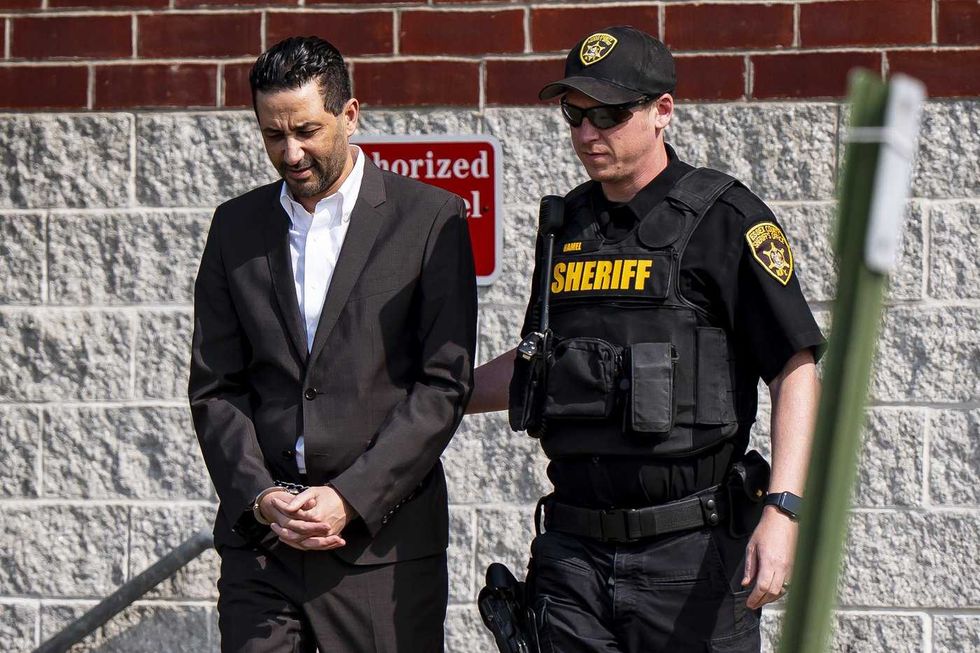 Luciano Frattolin is taken away in custody from the Essex County Court in Elizabethtown, New York on Friday, July 24, 2026. Luciano Frattolin charged with 2nd-degree murder and concealment of a human corpse.
THE CANADIAN PRESS/Christopher Katsarov
Luciano Frattolin is taken away in custody from the Essex County Court in Elizabethtown, New York on Friday, July 24, 2026. Luciano Frattolin charged with 2nd-degree murder and concealment of a human corpse.
THE CANADIAN PRESS/Christopher Katsarov Police officers open the back of a recovered truck during a press conference regarding Project 24K, a joint investigation into the theft of gold from Pearson International Airport, in Brampton, Ont., on Wednesday, April 17, 2024.
THE CANADIAN PRESS/Arlyn McAdorey
Police officers open the back of a recovered truck during a press conference regarding Project 24K, a joint investigation into the theft of gold from Pearson International Airport, in Brampton, Ont., on Wednesday, April 17, 2024.
THE CANADIAN PRESS/Arlyn McAdorey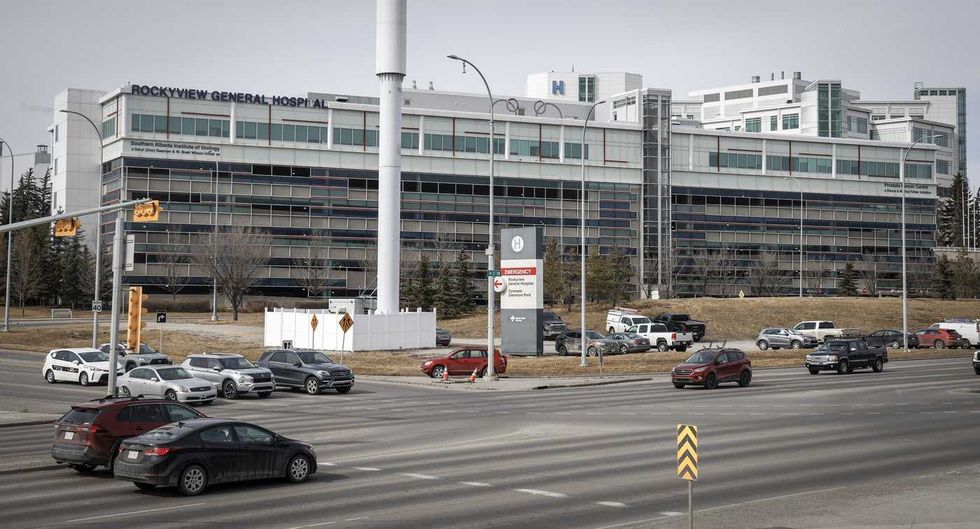 The Rockyview General Hospital is pictured in Calgary, Thursday, March 20, 2025.
THE CANADIAN PRESS/Jeff McIntosh
The Rockyview General Hospital is pictured in Calgary, Thursday, March 20, 2025.
THE CANADIAN PRESS/Jeff McIntosh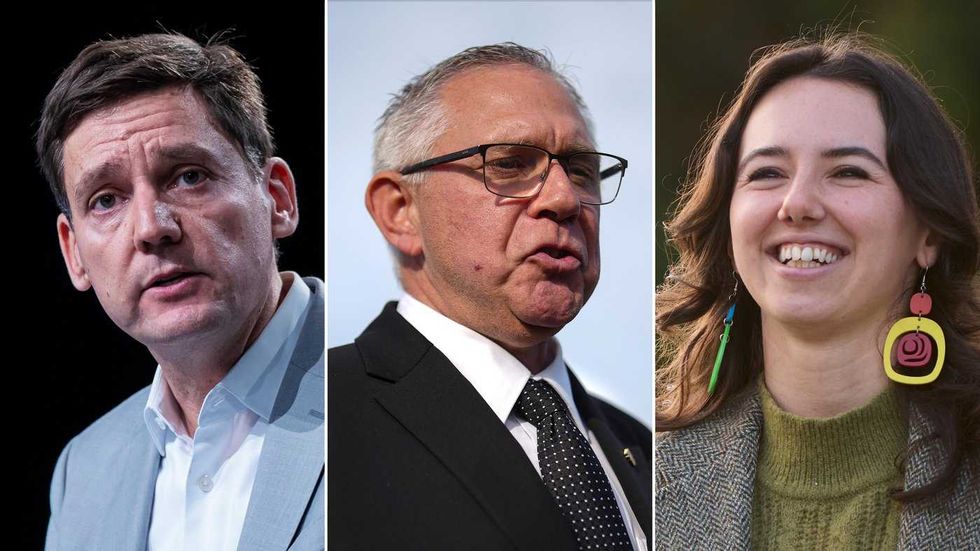 This composite image shows, left to right, B.C. NDP Leader David Eby in Vancouver, on April 13, 2026; B.C. Conservative interim Leader Lorne Doerkson, in Vancouver, on Sept. 22, 2026; B.C. Green Party Leader Emily Lowan in Victoria, on Sept. 23, 2026.
THE CANADIAN PRESS/Darryl Dyck, Rich Lam, Kevin Light
This composite image shows, left to right, B.C. NDP Leader David Eby in Vancouver, on April 13, 2026; B.C. Conservative interim Leader Lorne Doerkson, in Vancouver, on Sept. 22, 2026; B.C. Green Party Leader Emily Lowan in Victoria, on Sept. 23, 2026.
THE CANADIAN PRESS/Darryl Dyck, Rich Lam, Kevin Light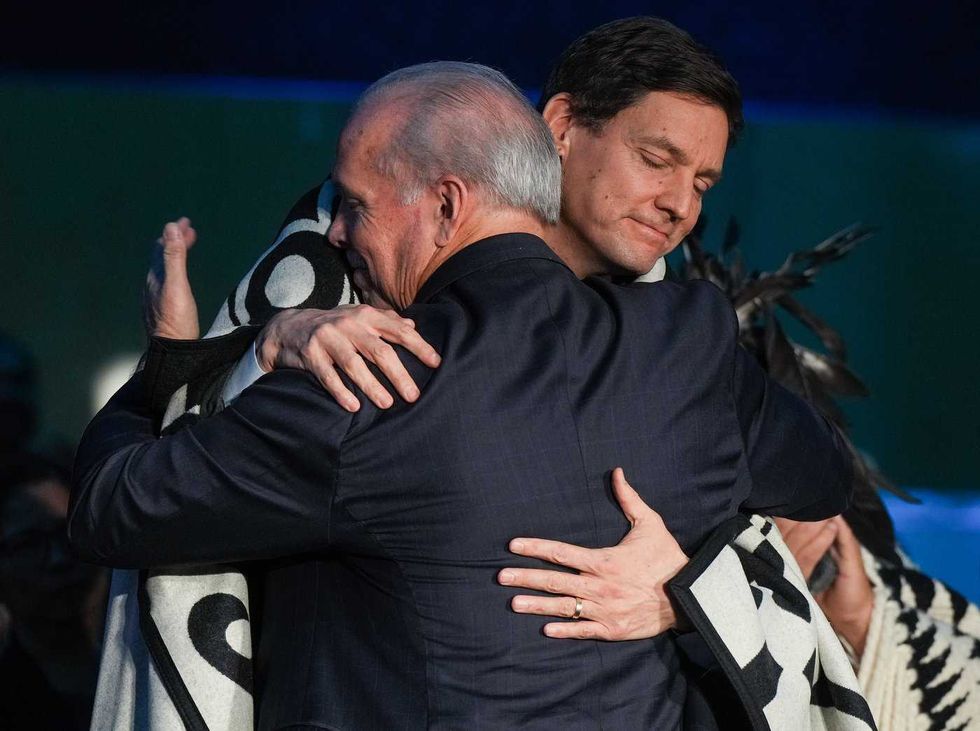 B.C. Premier David Eby, back, and outgoing premier John Horgan embrace during a swearing in ceremony where Eby became the province's 37th premier at the Musqueam Nation, in Vancouver, B.C., Friday, Nov. 18, 2022.
THE CANADIAN PRESS/Darryl Dyck
B.C. Premier David Eby, back, and outgoing premier John Horgan embrace during a swearing in ceremony where Eby became the province's 37th premier at the Musqueam Nation, in Vancouver, B.C., Friday, Nov. 18, 2022.
THE CANADIAN PRESS/Darryl Dyck