



This year's hurricane season is quickly becoming one of the most notorious in history, with Hurricanes Harvey, Irma, Jose and Maria sequentially wreaking havoc in the Caribbean and southeastern United States. There have been a total of 13 hurricanes in the Atlantic basin this year alone, and with the rapidly changing climate, such may become regular occurrences in the near future.
Dave Phillips, a senior climatologist at Environment Canada, says Atlantic Canada is most at risk of hurricanes in the north. While hurricanes this year have mostly concentrated themselves in the southeastern coast of the North America, Canada is certainly not immune to such disasters.
There have been several instances in the past where Canada was ravaged by strong hurricanes, with some having occurred as far back as 1775. Today, hurricanes are still powerful enough to travel as far north as the Maritimes and Newfoundland. Such was the case with Hurricane Igor in 2010.
Anthony Farnell, the chief meteorologist at Global News, says Nova Scotia is especially at risk. "On average they get one hurricane every three years in Atlantic Canada."
Ontario and Quebec, on the other hand, might only get residual effects of a hurricane in the form of gusty winds and torrential rain.
According to AIR, a catastrophe modelling company, hurricanes hit Canada more often than you'd think. "From 1951 to 2008, nearly 40% of Atlantic-named storms (tropical storms and hurricanes) entered the Canadian Hurricane Centre Response (CHCR) zone, and a quarter of those made landfall in Canada," writes senior scientist Dr. Sylvie Lorsolo.
The most recent hurricane to come close to Canada is Hurricane Jose. Over the past few days, it has travelled up the east coast and now threatens Nova Scotia with violent storms and coastal swells.
The most likely reason for this year's hurricane season being more violent than usual is climate change. However, climatologists are still not sure if that's really the case, as there isn't enough data to make conclusive findings.
All that's known is that hurricanes are fuelled by warm air and ocean water. Currently, the Atlantic Ocean is warmer and higher in sea level than it was years ago. Since climate change could have contributed to such conditions, it's possible that it also bears a link to the increasing intensity of hurricanes.

As for Canada, Phillip tells Global News that Atlantic Canada "should prepare for more powerful hurricanes." Environment Canada says that although hurricanes stronger than Category 3 are currently not possible in Canada due to colder water temperatures, that could change as waters continue to warm.
"We should think the weather in the future is going to be wilder, so we should prepare for it," says Phillips.
 Acute Care Alberta CEO Dr. Sayeh Zielke speaks as Major-General L.W. Rutland listens during a press conference following a fatal incident at CFB Wainwright in Alberta, in Edmonton, Sunday, Oct. 18, 2026.
THE CANADIAN PRESS/James Maclennan
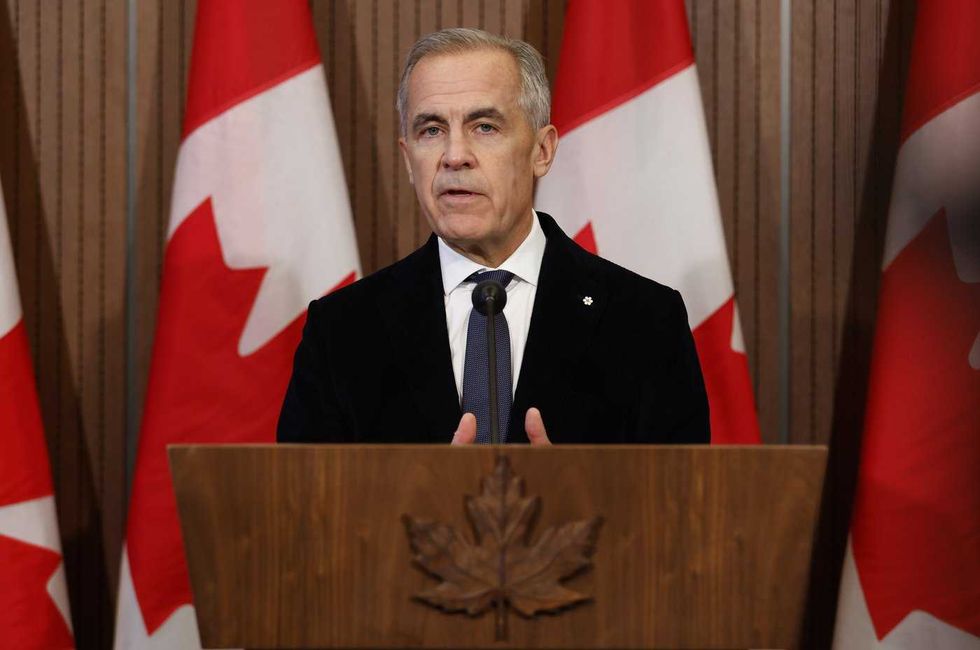 Prime Minister Mark Carney delivers a statement on Parliament Hill following a deadly fire at Canadian Forces Base Wainwright in Alberta, in Ottawa on Sunday, Oct. 18, 2026.
THE CANADIAN PRESS/Patrick Doyle
 Fire crews work the burn area on CFB Wainwright south of the town Wainwright Alta., on Sunday, Oct. 18, 2026. Four people have been killed and numerous others injured.
THE CANADIAN PRESS/John Ulan