



Canada's Travel Rules Are Getting Stricter Again & Even Fully Vaxxed Travellers May Be Impacted
Mandatory random testing is back, folks! ✈️
Get ready, travellers! Canada's travel restrictions are about to get stricter again as the feds have confirmed that mandatory random COVID-19 testing is coming back.
In a statement on July 14, Health Canada announced that mandatory random testing will resume on Tuesday, July 19, for travellers who are considered fully vaccinated against COVID-19.
It means at Canada's four major airports — Vancouver, Calgary, Montreal and Toronto — fully vaxxed travellers may be required to leave the airport to be tested for COVID-19.
The feds say testing will be completed at an in-person appointment, a testing provider location (such as a pharmacy), or via a virtual appointment.
According to Health Canada, moving the testing process outside of airports will "support testing for travellers" without creating any additional chaos at Canada's major airports.
Per the restrictions, fully vaxxed travellers entering Canada (including Canadians) may be randomly selected for a mandatory arrival test.
While they may now be required to leave the airport for testing, fully vaccinated people are permitted to travel on to their final destination, including on connecting flights, without waiting for test results.
Those who are not considered fully vaccinated — anybody who has not been vaccinated with a primary series of a COVID-19 vaccine accepted by the Government of Canada — must continue to test as required on arrival, on day one and on day eight of their two-week quarantine.
A notice from the federal government explains, "Air travellers who qualify as fully vaccinated and who are selected for mandatory random testing, as well as air travellers who do not qualify as fully vaccinated, will receive an email notification within 15 minutes of completing their customs declaration."
"The email will contain information to help them arrange for their test with a testing provider in their region."
Those who are not vaccinated will be required to take their tests via a virtual appointment or at a location that is able to work alongside their quarantine requirements.
Any travellers who test positive, regardless of their vaccination status, must go into isolation for ten days from the date of the test result.
If selected, passenger are under a legal obligation to take the test within the required timeframe.
"If you don't comply, you may not be exempted from quarantine. You may also be required to go to a quarantine facility, face fines, or other enforcement measures," says the Government of Canada website.
On June 11, the federal government paused mandatory random testing for air passengers as part of a broader strategy to reduce pressure on major airports.
The process was not dropped at land border crossings, meaning random testing has remained in place at the Canada-U.S. border. If selected, passengers crossing via land are given a self-swab kit to complete.
The government maintains that random testing at the border is necessary to help detect new variants of COVID-19.
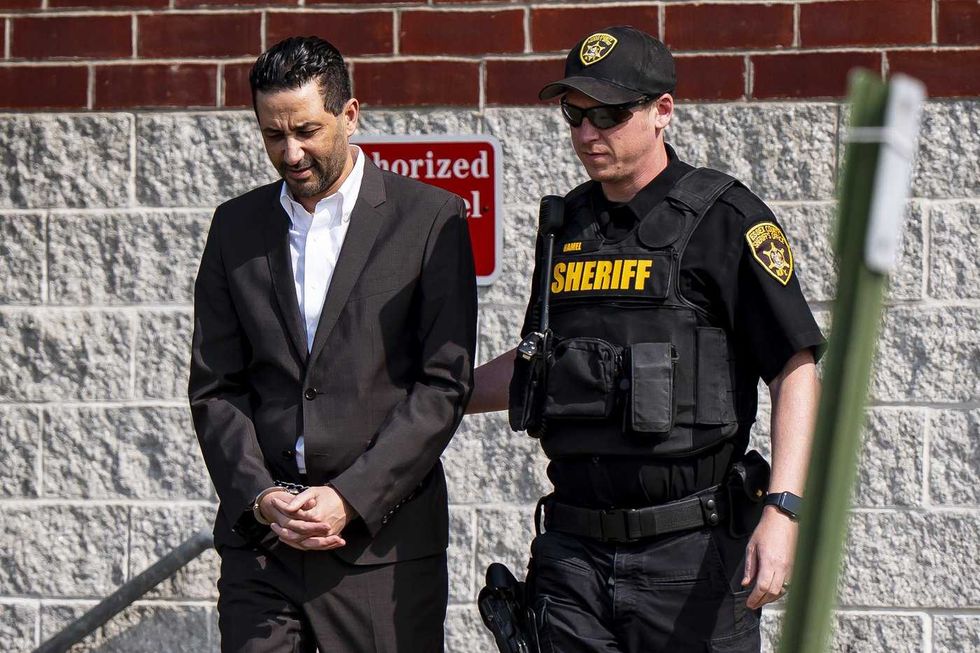 Luciano Frattolin is taken away in custody from the Essex County Court in Elizabethtown, New York on Friday, July 24, 2026. Luciano Frattolin charged with 2nd-degree murder and concealment of a human corpse.
THE CANADIAN PRESS/Christopher Katsarov
Luciano Frattolin is taken away in custody from the Essex County Court in Elizabethtown, New York on Friday, July 24, 2026. Luciano Frattolin charged with 2nd-degree murder and concealment of a human corpse.
THE CANADIAN PRESS/Christopher Katsarov Police officers open the back of a recovered truck during a press conference regarding Project 24K, a joint investigation into the theft of gold from Pearson International Airport, in Brampton, Ont., on Wednesday, April 17, 2024.
THE CANADIAN PRESS/Arlyn McAdorey
Police officers open the back of a recovered truck during a press conference regarding Project 24K, a joint investigation into the theft of gold from Pearson International Airport, in Brampton, Ont., on Wednesday, April 17, 2024.
THE CANADIAN PRESS/Arlyn McAdorey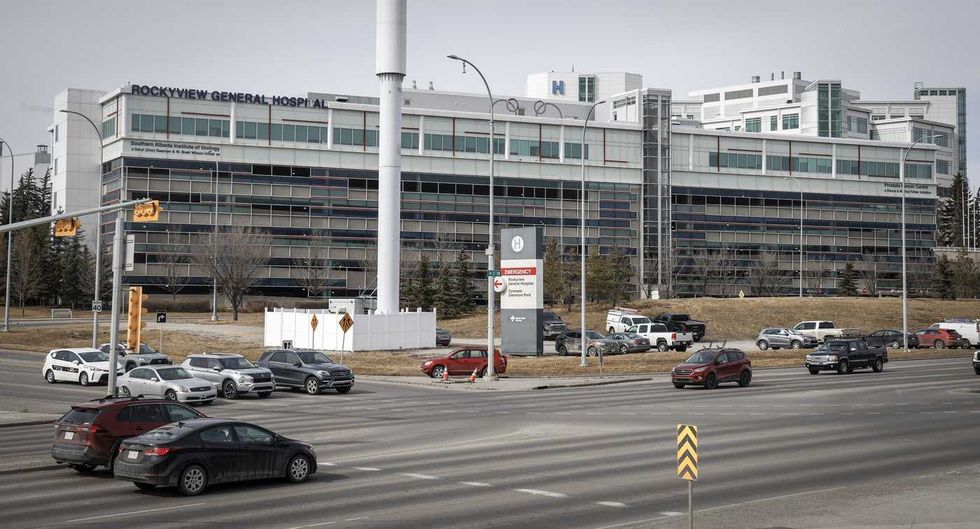 The Rockyview General Hospital is pictured in Calgary, Thursday, March 20, 2025.
THE CANADIAN PRESS/Jeff McIntosh
The Rockyview General Hospital is pictured in Calgary, Thursday, March 20, 2025.
THE CANADIAN PRESS/Jeff McIntosh This composite image shows, left to right, B.C. NDP Leader David Eby in Vancouver, on April 13, 2026; B.C. Conservative interim Leader Lorne Doerkson, in Vancouver, on Sept. 22, 2026; B.C. Green Party Leader Emily Lowan in Victoria, on Sept. 23, 2026.
THE CANADIAN PRESS/Darryl Dyck, Rich Lam, Kevin Light
This composite image shows, left to right, B.C. NDP Leader David Eby in Vancouver, on April 13, 2026; B.C. Conservative interim Leader Lorne Doerkson, in Vancouver, on Sept. 22, 2026; B.C. Green Party Leader Emily Lowan in Victoria, on Sept. 23, 2026.
THE CANADIAN PRESS/Darryl Dyck, Rich Lam, Kevin Light