



The vast Texas environment is popularly known as being geographically flat, extremely hot, filled with tumbleweeds, and has ugly beaches.
Little do outsiders know they are wrong about most of that.
There are tons of different things to do in the Lone Star State with gorgeous landscapes to visit, like going on an impressive mountain hike or heading to massive, crystal clear lakes.
There's no shortage of unique natural wonders, and many you simply wouldn't believe exist.
A perfect example is the naturally occurring salt lakes at the southern tip of the state. They are like the Dead Sea or the Bonneville Salt Flats in Utah, but a little closer to home.
La Sal del Rey
The 530-acre expanse is probably the state's most popular saline lake, yet it's still somewhat of a hidden gem simply because many people still don't know it exists.
It sits on an estimated 4 million tons of salt, which leaves giant salt crystals along the white salty beach that you can take home. You can't float in it like the Dead Sea, but it's still a unique experience.
Your friends probably won't believe you when you tell them it's in Texas!
East Lake, La Sal Blanca
La Sal Blanca is pretty much right next to La Sal del Rey within the Lower Rio Grande National Wildlife Refuge.
It's a smaller, fenced-in lake with a salt beach just as cool as La Sal del Rey.
This lake is more popular with the surrounding coastal wildlife like the Gull-billed Terns who nest there rather than the people who visit. In fact, access to this lake is sometimes restricted during the height of the bird's nesting season.
La Sal Vieja
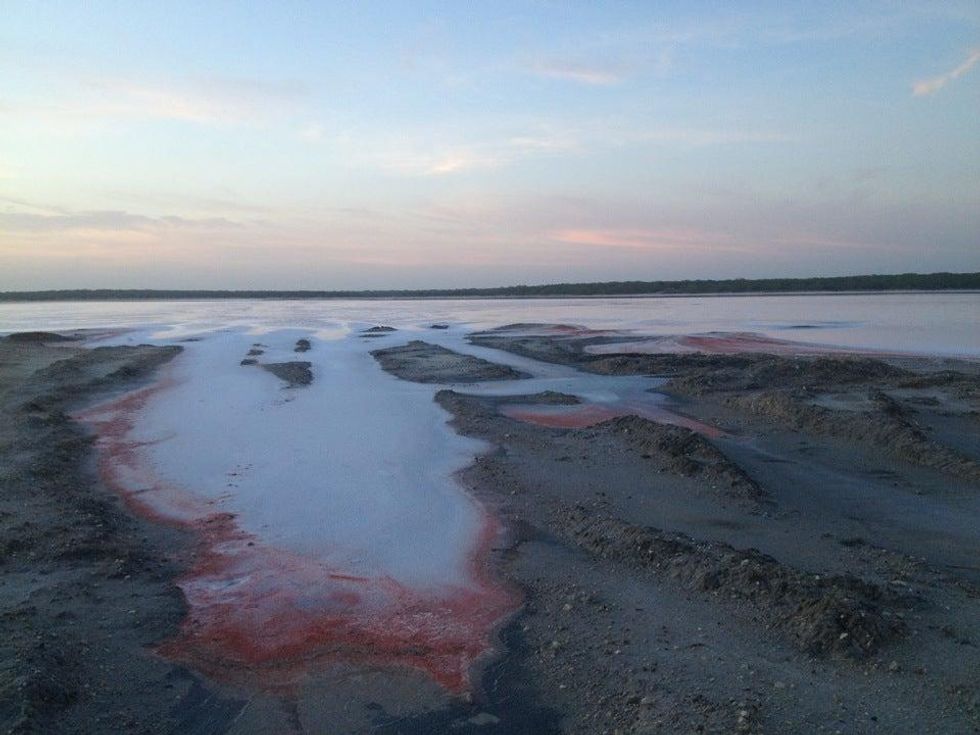 La Sal Vieja in Raymondville, TX.Sergio C, Foursquare
Known in English as "Old Salt," the lesser-known lake is about a 30-minute drive from the other two.
The historical site supposedly once had giant salt deposits that were used in trades between Native American tribes and Spanish settlers way back when according to the Texas State Historical Association.
While there aren't literal piles of salt anymore, there are still some cool photo opportunities when the salty water recedes and red salt is left.
 Le bocal à cornichons à retourner vert offert à 12 $ au Tigre Géant.Noémi Lincourt | Narcity Québec
 Le bocal à cornichons en verre de la marque WhiteRhino, offert à partir de 24,99 $ sur Amazon Canada.