
Certains Québécois peuvent se faire rembourser leur déneigement : Voici qui et comment
En plus de ne pas avoir à pelleter, t'as pas à payer en totalité! 🤑
L’hiver approche à grands pas et, pour plusieurs propriétaires, c’est déjà le temps de penser au contrat de déneigement. Mais savais-tu que certaines personnes peuvent récupérer jusqu’à 40 % de leur facture grâce à un crédit d’impôt de Revenu Québec? On t’explique qui peut en profiter en 2026 et comment en faire la demande.
À lire également : Voici quand tu devrais poser tes pneus d'hiver en 2026 au Québec selon un expert
Si tu ne connais pas le crédit d’impôt pour maintien à domicile des aînés, te voilà enfin présenté à cette mesure du fisc provincial destinée aux personnes de 70 ans et plus qui souhaitent continuer à vivre chez elles, même en pleine autonomie.
Selon la Chaire de recherche en fiscalité et en finances publiques (CFFP) de l’Université de Sherbrooke, cette aide financière s’adresse à plus de 500 000 personnes au Québec, selon des données de 2022.
Qui peut obtenir un remboursement pour son déneigement?
Pour être admissible, tu dois avoir 70 ans ou plus et résider au Québec à la fin de l’année. Pas besoin d’être en perte d’autonomie pour en profiter. Les personnes aînées autonomes y ont droit aussi, qu’elles soient propriétaires ou locataires.
Revenu Québec confirme que les services de déneigement et d'entretien du terrain sont admissibles, tout comme certains travaux extérieurs, notamment la pose et le retrait d'un abri saisonnier.
Les propriétaires de copropriétés peuvent également bénéficier du crédit pour les frais de déneigement inclus dans leurs charges communes.
Le crédit est remboursable, ce qui signifie que tu peux en profiter même si tu n'as aucun impôt à payer.
Combien peux-tu économiser?
En 2026, le crédit d'impôt représente 40 % des dépenses admissibles. Par exemple, pour un contrat de déneigement admissible de 500 $, tu pourrais récupérer 200 $. Une facture de 750 $ pourrait, quant à elle, donner droit à un crédit de 300 $.
Toutefois, le montant réellement accordé dépend notamment de ton revenu familial et des autres dépenses admissibles au programme.
Selon la CFFP, le crédit commence à diminuer lorsque le revenu familial dépasse 72 465 $ en 2026. Les règles de réduction varient toutefois selon le niveau d'autonomie.
En tout et partout, les dépenses annuelles admissibles sont également plafonnées à 19 500 $ pour une personne seule autonome et à 25 500 $ pour une personne seule non autonome. Cela représente des crédits d'impôt maximaux respectifs de 7 800 $ et de 10 200 $ en 2026, avant toute réduction liée au revenu.
Ces plafonds concernent l'ensemble des services admissibles au maintien à domicile, et non uniquement le déneigement.
Comment réclamer le crédit d'impôt?
Deux possibilités s'offrent à toi : réclamer le crédit dans ta déclaration de revenus du Québec, en remplissant l'annexe J, ou demander des versements anticipés auprès de Revenu Québec.
Pour les propriétaires de maisons qui souhaitent recevoir leur crédit à l'avance, il faut remplir le formulaire TPZ-1029.MD.9 ou utiliser les services en ligne de Revenu Québec.
Tu as jusqu'au 1er décembre 2026 pour demander des versements anticipés pour cette année. Ceux-ci sont versés directement dans ton compte bancaire. Assure-toi de conserver tes factures et tes pièces justificatives.
Quelles sont les autres dépenses admissibles?
Il faut savoir d'emblée que ce ne sont pas tous les frais qui sont admissibles, aux yeux de Revenu Québec. Ceux qui le sont, outre le déneigement et l'entretien paysager, varient selon l’endroit où vit la personne. Voici quelques exemples :
En maison ou en copropriété
- Entretien ménager ;
- Livraison d’épicerie et de repas ;
- Aide à l’hygiène et à l’habillage ;
- Services infirmiers et soins personnels ;
- Travaux mineurs d’entretien et de réparation.
En logement locatif
- Un montant correspondant à 5 % du loyer mensuel est automatiquement considéré comme une dépense admissible ;
- Le loyer pris en compte est d’au moins 600 $ et d’au plus 1 200 $ par mois ;
- Les services non inclus dans le loyer, comme le ménage, le déneigement, la livraison d’épicerie ou les soins à domicile, peuvent être ajoutés séparément.
En résidence privée pour personnes aînées
- Une portion importante du loyer ;
- Les services de repas ;
- L’entretien ménager;
- Les soins infirmiers et l’aide personnelle.
Advocates planting the seed of a tree protection law in Winnipeg's election
The giants that Diane Poulin used to live among are all dead, but she's hoping to protect the ones still left in Winnipeg.
“I had five mature elm trees right in front of my house that leaned over the street and formed a beautiful canopy, and they're all gone now,” she says.
In her backyard was the biggest of the bunch.
"He was like the grandfather of the neighbourhood … his canopy filled our backyard, and he’s gone."
The city’s trees are under threat from disease, pests and climate change, but there's limits on how much can be done to push back against these forces of nature.
So, Poulin and other advocates at Trees Please Winnipeg are also pushing to hold back another threat — property owners.
The group wants Winnipeg to put a bylaw in place to control the cutting of trees on private property, since there's currently little stopping owners from cutting down as many trees, however big, as they please.
Advocates like Poulin say protecting the urban canopy is crucial because of the many benefits trees bring to all residents, such as providing shade in heat waves, cleaning the air, controlling rainwater and beautifying the city.
With more than 80 per cent of the city’s trees on private property, there needs to be a way to preserve those trees, too, she says.
To ramp up pressure, Trees Winnipeg has pushed candidates in the municipal election to sign a pledge that includes a commitment to enact a bylaw that would control the removal of all tress more than 15 centimetres in diameter.
Many cities across Canada already have some form of private tree bylaw, which generally still allow cutting trees for development or when they're unhealthy, but not when someone just doesn't want to rake leaves anymore.
Surrey, B.C., passed protections in 2006, while cities such as Ottawa, Vancouver and Toronto have since joined in. Edmonton has one in the works.
"We're really falling behind on that front," Poulin says.
About 75 per cent of candidates have signed on to the pledge, she says, though there are some notable gaps, including incumbent mayor Scott Gillingham.
At a recent campaign stop, he said he was proud of his record on trees, which saw the city boost funding and its replacement rate for trees. But he would only commit to council talking about a bylaw protecting trees on private property, not passing one.
"We have to take a look at what it is and what the nuances are, what the requirements would be, what the terms of any bylaw would be," he said.
The mayor and council have been made aware of how passionate many Winnipeggers are about trees. When city leaders tried to fill a financial gap this summer by cutting the forestry budget, there was enough of an outcry they backed down.
But going so far as to tell private property owners what they can do with their trees can also raise passions.
In Toronto, for example, such bylaws have led to frustrated homeowners who have been told they can't cut down their mature ginkgo trees, despite the trees starting to produce their noxious-smelling fruit.
Such a bylaw could have also made it challenging for Paul Taylor to clearcut his tree-covered lot in Winnipeg, which stood as something of an extension of the city’s Assiniboine forest.
Taylor says he did it over security concerns, as the trees hid his old family home from the street, leading to break-ins and vandalism, so he flattened the whole place.
The business owner says he’s still in favour of some kind of bylaw protecting trees, as long as it leaves room for genuine safety and liability situations, and has some kind of replanting requirement.
"I'm generally supportive of protecting Winnipeg's urban tree canopy, and I don't see that as being at odds with being a developer," he says.
Neighbours that were asked about the clearcut didn’t jump to support laws to prevent it.
Brian Paterson, who has lived next door for 67 years and enjoyed the view of the ancient oaks and other trees that grew there, says that within reason, people should be able to decide for themselves.
“Would I rather the trees be there? Yeah, but he has a right to whatever he wants to do with his property.”
Across the street, Bianca Johnson says she loves the idea of protecting trees, but worries about how far a law may go, and what kind of hassle someone might have to go through to deal with, say, a diseased tree.
“In general it sounds great, but details are always the important nitty-gritty bit,” Johnson says.
“There’s always the personal rights versus communal rights.”
While such bylaws do limit the personal, it’s not so different from many existing laws, said Erna Buffie, who published a book earlier this year on saving the urban canopy.
“I have to pull a permit if I want to do any kind of renovation on my property or in my house, but I can go ahead and cut down a tree that's 100 years old without any repercussions,” she says.
“There's something fundamentally wrong with that.”
She says the current lack of protections means, for example, that the owner of the Lemay Forest was within their rights to cut down the roughly 17,000 trees on the property. The forest, and the graves within it, were only saved when the province stepped in to expropriate it last year.
With the city’s trees still largely unprotected, Poulin at Trees Please has also been working to add new ones.
She helped raise money to plant eight trees across from her house, even though she won't be around to see them grow to the grandeur of what they replaced.
"We do this for the next generation of Winnipeggers and kids and grandkids, who need to inherit a city that is livable for them."
This report by The Canadian Press was first published Oct. 18, 2026.
By Ian Bickis | Copyright 2026, The Canadian Press. All rights reserved.
De Havilland calls for national water bomber fleet as it scrambles to meet demand
On July 13, a pair of Canadair water bombers touched down on the Seine River, skimming along its surface to refill their water tanks as they battled a wildfire south of Paris.
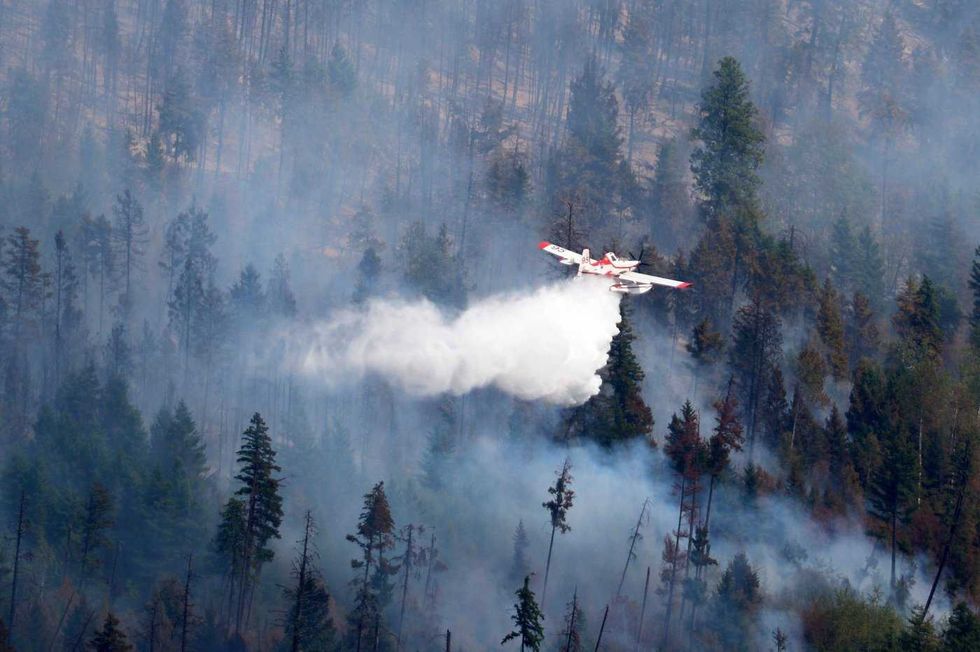
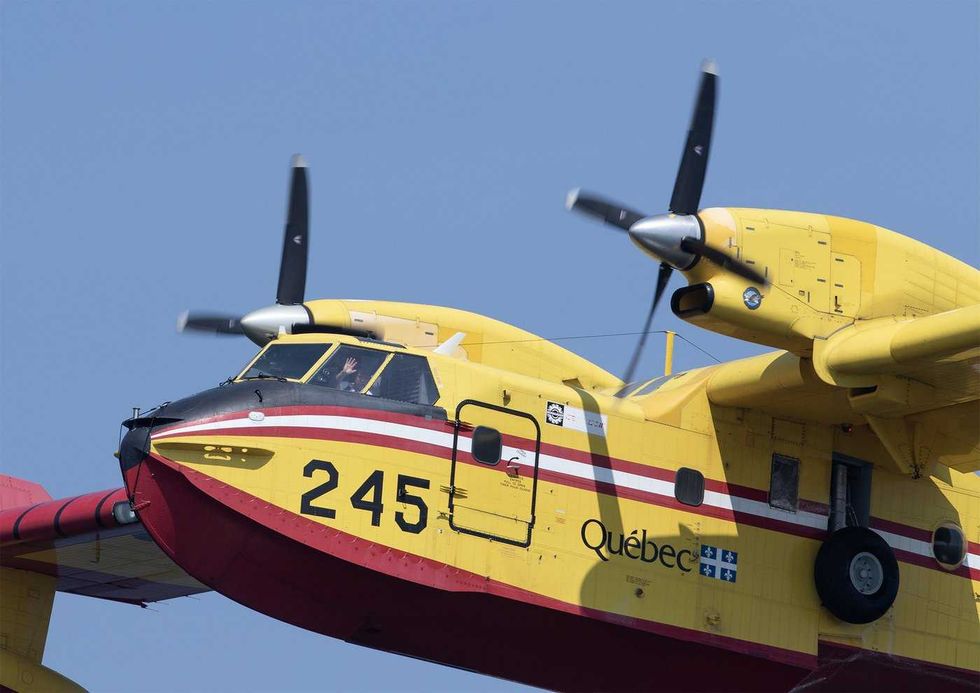
The "super scoopers," with their signature ketchup-red wing tips on a mustard-yellow body, sucked up 6,000-plus litres from France’s most famous waterway in one go as part of a fight against the flames then rampaging across Europe.
The event in north-central France underscored how wildfires are ranging even farther from their traditional grounds and fuelling an urgent need for water bombers to fend off climate disasters.
The iconic Canadair turboprops serve as the only amphibious firefighting aircraft currently in production built from the outset for that purpose, rather than being retrofitted to douse flames.
Now, the Canadian company behind the water-scooping planes is calling for a national fleet of them at home, even as it struggles to meet soaring demand from across a warming globe.
De Havilland Aircraft of Canada revived production of the legendary Canadair planes in 2024 after European countries from Portugal to Greece placed orders for a program whose assembly line had halted in 2015, when it was run by Bombardier Inc.
That hiatus meant a supply chain that drew on 60,000 parts for the firefighting turboprop had evaporated, with procurement a major hurdle that pushed the projected delivery date for the first Canadair DHC-515 (formerly called the CL-515) to early 2028.
Neil Sweeney, De Havilland’s vice-president of corporate affairs, says an order for 50 new water bombers from the federal government or the provinces would give it the financial runway — hundreds of millions of dollars — to launch a second production line at its new assembly plant east of Calgary.
“If we want to stop fires from becoming large and becoming megafires, we need to get on them quicker. And the only way to get on them quicker is to have the infrastructure to do so,” he said, citing water bombers as the backbone of an aerial strategy that includes smaller scoopers, evacuation helicopters and air tankers with fire retardants.
“These fires are becoming significantly more damaging — devastating — and either we invest money upfront in prevention or we’re going to pay for it in reconstruction.”
Sweeney pointed to wildfires that took out about 400 structures in Jasper, Alta., in 2024 and hundreds more since. Last summer, fires in northern Ontario blanketed large swaths of the province and some of the United States in a smoky orange haze, forcing First Nations communities to flee. In August, blazes in British Columbia destroyed hundreds of buildings near Vernon and Summerland and forced tens of thousands from their homes.
“We can’t afford to wait any longer,” Sweeney said.
Another reason to forge ahead has to do with competitors. If the backlog of plane orders gets too long, buyers will likely look elsewhere.
“The danger of a slow ramp-up here is that the scarcity creates its own competition,” said Christopher Read, former director of corporate development at Air Canada. “If it can’t turn that into delivered aircraft quick enough, customers won’t wait. They will find alternatives.”
There’s even a risk that “somebody’s going to steal or re-engineer their planes,” added Wendy Gilmour, former director general of international and industry programs at the Department of National Defence. “All of a sudden we’re going to find out they’re making it in China for a quarter of the price — and just as good an aircraft.”
De Havilland still has a window of at least several years during which it will boast the strongest product, Read added. But upstarts are chasing its contrails.
Aerospace companies such as Positive Aviation, Kepplair Evolution and Hynaero of France are all developing water bombers. Italy’s 19-01 Holding aims to roll out its first prototype, which can scoop roughly twice the water volume of the DHC-515, by 2028.
“The iconic Canadair aircraft, the only plane of its kind, no longer meets reliability and availability requirements,” claims the website for Positive Aviation, based in a suburb of Toulouse.
“None of the projects announced over the past decade — whether to remanufacture the Canadair or develop a new aircraft of this type — are considered enough for the market needs.”
It pointed to the pace of production for Canadairs, which will be riveted by hand and roll of the line at a projected rate of 10 per year, partly due to a lack of automation. Positive Aviation's alternative claims a one-third higher water capacity, “superior stability” and a production rate of 12 per year starting in 2030.
Its critique could be seen as an inherent affirmation of Canadair as the “gold standard of firefighting aircraft” — for now — as De Havilland’s Sweeney frames it.
“There are a number of people that have ideas and are looking for backing in order to bring another one into production. That’s always a risk, that there’s a competitor. But at this point, we are the only large scooping aircraft in production,” Sweeney said.
The first two Canadairs are currently in production, with the initial one bound for Greece. Spain, France, Portugal, Italy and Croatia are also all customers. The 38 planes now on the order book, which include six for Ontario, five for Alberta — at a $400 million price tag — and three for Manitoba, are sold out through 2034, Sweeney said.
Canada and the European Union will announce the joint purchase of 50 De Havilland water bombers at a conference in Montreal at the end of October, according to a draft joint statement seen by The Canadian Press. But it remains unclear whether that order includes the 38 aircraft already on the books or comes on top of them.
In May, the federal government set up Canada’s first-ever reserve of firefighting aircraft, leasing 10 planes for 150 days thanks to a $317-million spending allocation in the 2025 budget.
But experts say Canada needs more than money and orders to beat back the flames and protect communities.
“There’s no national co-ordination for the fleet of water bombers,” said John Gradek, who teaches aviation management at McGill University.
“There is a provincial focus on firefighting that’s very parochial. Governments do their own thing, manage their own budgets, pay for their own airplanes, pay for their own pilots, training and everything else,” he said.
Some provinces own water bombers — Ontario and Quebec operate nearly two dozen of the 160 Canadairs in circulation around the world. Other provinces rent or borrow them. But Canada has no national wildland firefighting strategy, despite years of demands to create one, including a Senate committee report in June that recommended a national aerial firefighting fleet.
In contrast, Australia has a more centralized model where states and territories fund the National Aerial Firefighting Centre, which leases or contracts planes from at home and abroad.
In August, Ontario Premier Doug Ford called for 60 new water bombers and a national fleet under a countrywide wildfire strategy.
The question now is how many can be churned out before the decade is over — and how those planes will be managed.
This report by The Canadian Press was first published Oct. 18, 2026.
Companies in this story: (TSX:BBD.B)
By Christopher Reynolds | Copyright 2026, The Canadian Press. All rights reserved.

Bryan McCormick confirme sa séparation avec Élisabeth Rioux
Depuis quelques semaines, des rumeurs de séparation entre Élisabeth Rioux et Bryan McCormick circulent, et la nouvelle est maintenant confirmée.
Après avoir révélé qu'ils vivaient des moments difficiles en septembre dernier, les abonnés ont vu le couple se retrouver quelque temps, mais il semblerait que leur union ait maintenant pris fin officiellement.
C'est ce qu'a confirmé Bryan dans un commentaire Instagram sous sa dernière publication, partagée mardi soir, lorsqu'une fan lui a demandé « pourquoi on ne sait pas ce qui se passe ».
La sélection de l'éditeur: Alicia Moffet publie une story de son amoureux Alex par erreur et revient sur l'incident
“
On est plus ensemble c'est pas mal ca ...
Bryan McCormick
Il ajoute à ce commentaire : « le reste c'est notre vie et on a le droit de garder ça pour nous ».
Contacté par Narcity, Bryan a expliqué que c'est « pour le moment, et non une décision officielle. » Il ajoute : « je n'ai fait que mettre la lumière sur ce qui était déjà évident. »
De son côté, Élisabeth Rioux n'a pas adressé directement la question. L'entrepreneure n'a pas voulu émettre de commentaire et aimerait garder cette période de sa vie personnelle pour elle.
En juillet dernier, Élisabeth a donné naissance à leur fille, Wolfie.
Le couple était ensemble depuis décembre 2018.