



THE CANADIAN PRESS/Handout - Facebook, Nadine Dunford; Patricia Farrell; Wylder Goulding; Canadian Armed Forces (Mandatory Credit)
Pte. Shaun Farrell
Farrell, a member of the 3rd Battalion Princess Patricia’s Canadian Light Infantry based at Edmonton, was from Prince Albert, Sask.
He wanted to make a career in the forces, Prime Minister Mark Carney said during a tribute in the House of Commons.
"Pte. Farrell was generous and deeply loyal friend, known in his battalion as the grandmaster of chess," Carney said.
Farrell's mother said in a social media post that the family is confronting a profound loss.
"We want to thank everyone for your love, support, and prayers during this incredibly difficult time," Patricia Farrell said.
She asked for privacy as she grieves the loss of her "darling child."
Saskatchewan lowered flags in the province to half-mast in his memory.
"Shaun was a young man full of promise who chose to serve his country," said Premier Scott Moe.
"His loss will be felt deeply by his family, friends, fellow service members, and all who knew him," Moe said in a statement.
—
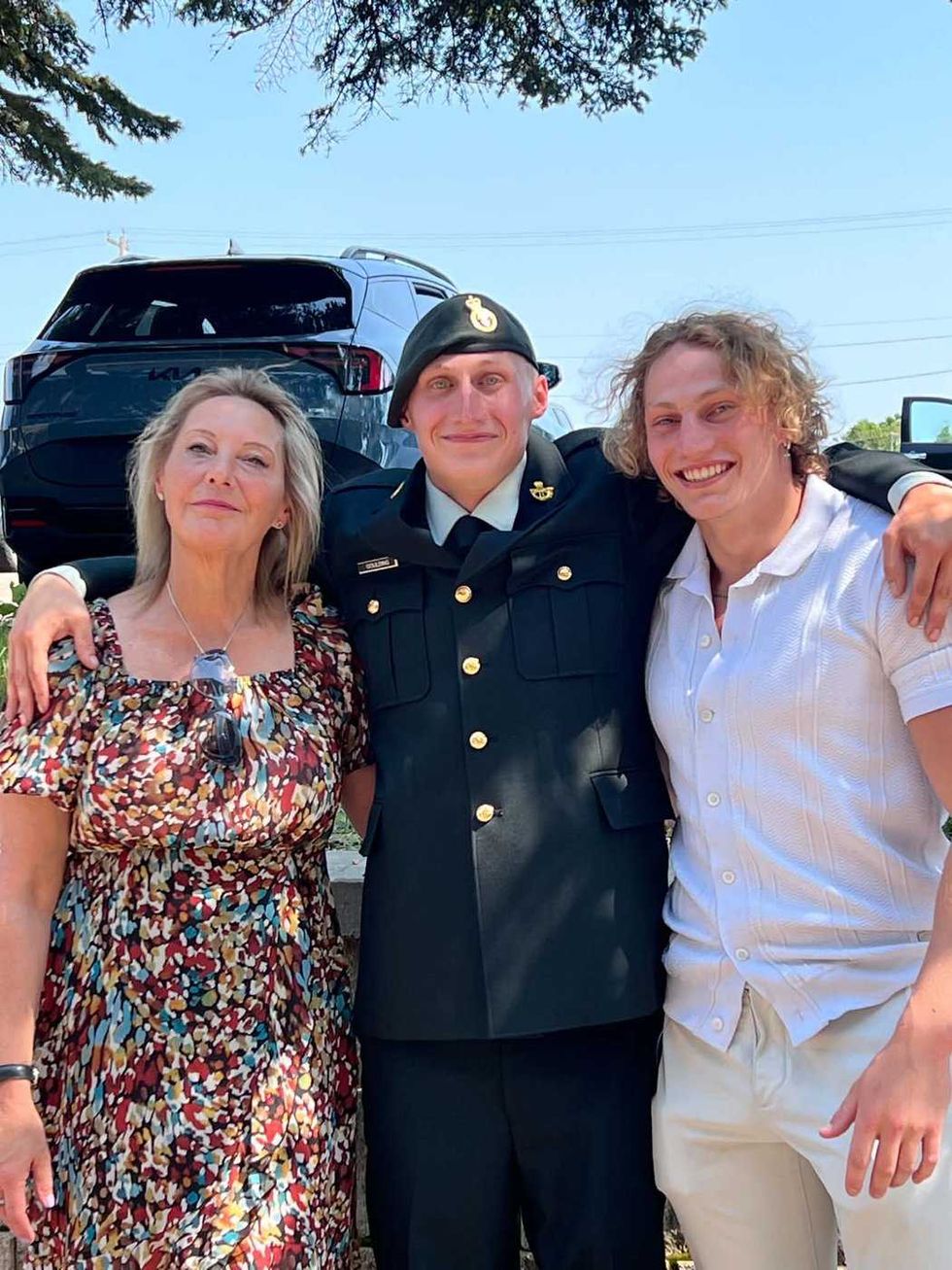 Aidan Goulding, 23, is shown in an undated handout photo alongside his mother Sonia Monk and brother Wylder Goulding. Goulding was one of four Canadian Armed Forces members who was killed in an out of control grass fire during a training exercise at CFB Wainwright Saturday night.
THE CANADIAN PRESS/Handout - Wylder Goulding (Mandatory Credit)
Pte. Aidan Goulding
The 23-year-old of North Vancouver was also a member of the 3rd Battalion Princess Patricia’s Canadian Light Infantry.
His family said he was an exceptional athlete and, after high school, became a mechanic.
He later quit to join the Army.
"Although he was making excellent money and had a good life, he decided he wanted to defend his country. His goal was to work for Special OPs and then onto CSIS," his mother, Sonia Monk, and older brother, Wylder Goulding, said in a statement.
"He was the guy that kept people's spirits up, a contagious laugh and a cheeky smile, he took his role in the army seriously, and our family and his dear friends have suffered a great loss."
They said he loved his adopted army family and was looking forward to peacekeeping in Latvia.
"Before he went to basic training, he said, ‘I know I have one life to live, and I’m gonna make the best out of it.' That was our Aidan."
He went above and beyond in his service, added Carney.
"Pte. Goulding met every hardship with a joke, and when others struggled, he shouldered more than his share without ever being asked."
—
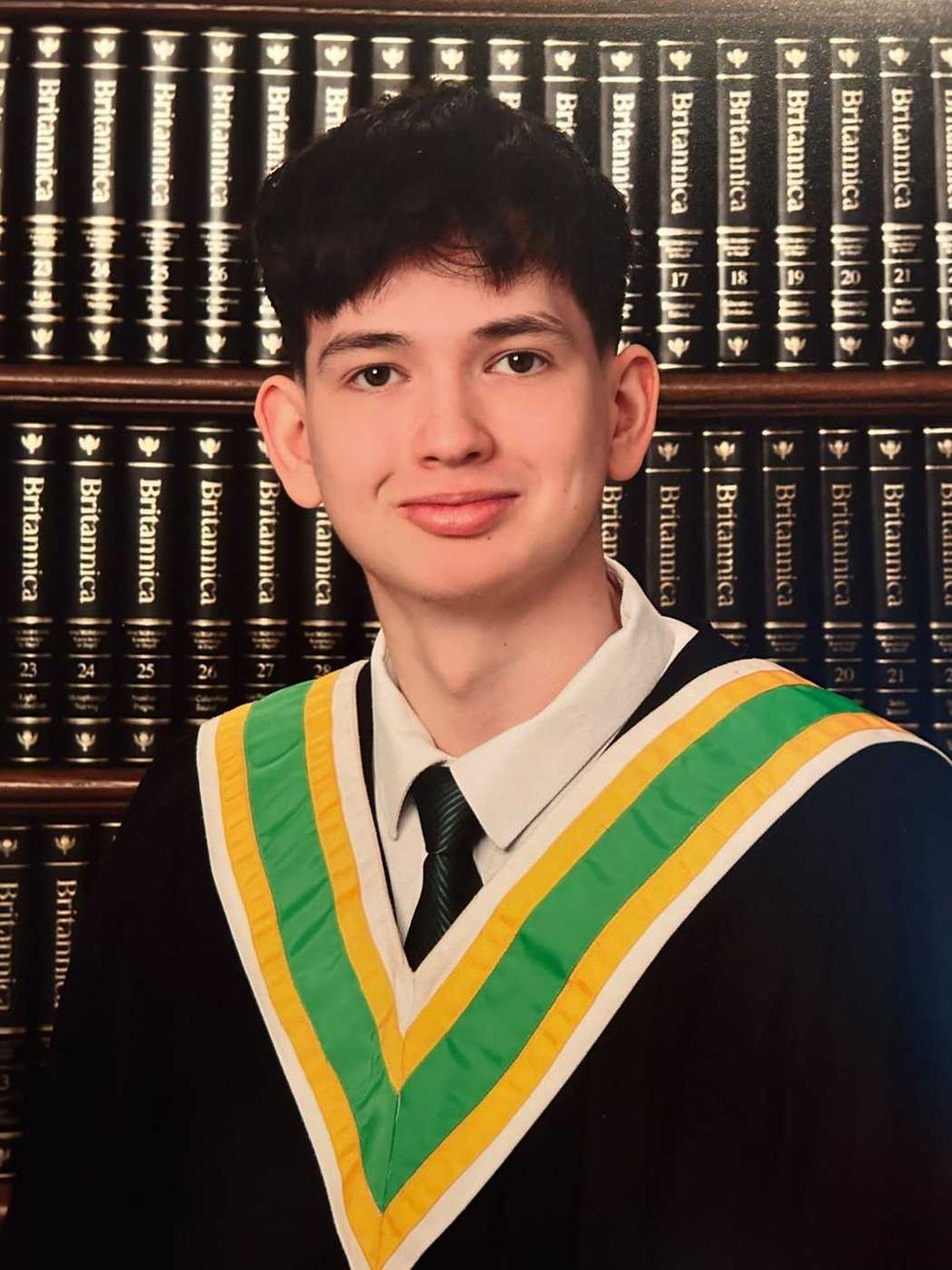 Pte. Hayden Lykkemark, from 3rd Battalion Princess Patriciaâs Canadian Light Infantry based at Edmonton, is shown in an undated handout photo published to social media. Lykkemark died during a training exercise at CFB Wainwright on Saturday, Oct. 17, 2026.
THE CANADIAN PRESS/Handout - Facebook, Nadine Dunford (Mandatory Credit)
Pte. Hayden Lykkemark
The 19-year-old was from Langley, B.C., and served with the 3rd Battalion Princess Patricia’s Canadian Light Infantry.
"Pte. Lykkemark was known for his gift for lightening a hard day, his quick wit. He dreamed of a career in law enforcement," said Carney.
Trevor Plater, who coached Lykkemark in rugby his senior year at Langley Secondary School, said he was "always looking out for everybody."
Plater added that all of the team and Lykkemark's schoolmates thought of him as a best friend.
B.C. Premier David Eby recognized Lykkemark and Goulding in a social media post.
"In this moment of profound heartbreak, as British Columbians and Canadians, let's wrap our arms around their families, supporting them and joining in the mourning of this horrible tragedy," he said.
---
 Sgt. Morgan Wong, 26, is shown in an undated handout photo. Wong was one of four Canadian Armed Forces members who was killed in an out of control grass fire during a training exercise at CFB Wainwright Saturday night.
THE CANADIAN PRESS/Handout - Canadian Armed Forces (Mandatory Credit)
Sgt. Morgan Wong
The 26-year-old from Edmonton was a reservist with the Loyal Edmonton Regiment, serving with the 3rd Battalion Princess Patricia’s Canadian Light Infantry.
"He was an incredible person who was always there whenever anyone needed him," his family said in a statement.
"He loved being active and spending time with his friends and family. He was extremely proud to serve with the Canadian Armed Forces."
They said he earned a bachelor of commerce degree from the University of Alberta, as well as certificates in real estate and civil-military leadership.
He joined the Forces in 2017, and for the last four years worked as a financial analyst and manager with the Alberta government. He also served as a first responder with St. John Ambulance.
He served in Latvia from October 2024 to June 2025, and was preparing for a second tour in Europe.
"We are deeply saddened by the loss of Sergeant Morgan Wong of the Loyal Edmonton Regiment, and all those who lost their lives yesterday at Wainwright," the 49th Battalion Loyal Edmonton Regiment Association said in a social media post.
"Our thoughts and prayers are also with the injured, their loved ones and everyone affected by this tragedy.
"We will remember them."
This report by The Canadian Press was first published Oct. 20, 2026.
— By Dayne Patterson in Edmonton, Bill Graveland in Calgary, Nick Murray in Ottawa, and Ian Bickis in Winnipeg
Copyright 2026, The Canadian Press. All rights reserved.
Voici pourquoi la chicane entre Varda et Marie-Chantal n'a pas été diffusée à Big Brother
Le lundi 25 janvier, Varda et Marie-Chantal ont dévoilé en confessionnal qu'un événement créait des tensions entre elles à Big Brother Célébrités. N'ayant jamais eu accès aux images montrant la chicane, les fans sont confus alors que des caméras filment les candidats 24 heures sur 24.
Pourquoi est-ce qu'une querelle entre deux candidats ne serait pas montrée, alors qu'elle affecte tout le monde dans la maison, et a même mené à la mise en ballotage des personnes concernées?
L'équipe de production de Big Brother explique ses raisons à Narcity.
La sélection de l'éditeur : Les fans veulent des réponses sur la chicane de Marie-Chantal et Varda à Big Brother
Big Brother Célébrités
Selon ce que Marie-Chantal, Varda et d'autres participants ont révélé lors de l'émission, la bisbille aurait commencé lorsque la chanteuse était sous médication pour sa dent cassée.
Cette soirée-là, Marie-Chantal aurait consommé de l'alcool malgré les contre-indications et aurait passé un commentaire au sujet de la santé mentale de Varda.
Cette dernière, qui essayait apparemment d'inciter Marie-Chantal à aller se coucher, rapporte que ce genre de commentaire est inacceptable.
Cela dit, les images n’auraient pas été diffusées, car elles ne servent pas à faire avancer le jeu côté stratégie :
« Leur récente chicane teinte fortement l’ambiance dans la maison. Comme ça influence l’aventure, il était important d’expliquer la situation et que les deux nous en parlent en confessionnal.
« Il se passe beaucoup de choses dans la maison et on se concentre sur les stratégies et le jeu. Il n’était donc pas nécessaire de rentrer dans le détail pour comprendre le contexte et pour le narratif de l’émission. »
On en voit donc juste assez pour comprendre les décisions stratégiques des joueurs, comme celle de mettre Marie-Chantal et Varda en ballotage à cause de l'ambiance que leur discorde apporte dans la maison.
Lors des dernières éditions d'Occupation Double, comme celle à laquelle Kevin a participé en Afrique du Sud, de gros conflits entre participants ont mené à des prises de positions et des vagues de haine du côté des Québécois.
La section commentaire sur les comptes Instagram de certaines personnalités de téléréalité a déjà dû être fermée, et des messages haineux ont été reçus par centaines par les participants.
Certains ont donc proposé que le « drama » entre les candidats qui n'amène rien au « narratif de l’émission », comme le fait Big Brother, ne soit pas montré pour éviter ces comportements.