



What We Know About Omicron Symptoms & When You Become Contagious, According To Studies
What does "mild" mean, exactly?
Omicron has seemingly come out of nowhere to change the shape of the pandemic, and that includes shaking up what we can expect from a positive COVID-19 test.
Scientists and doctors are currently racing to study all aspects of this highly mutated variant, and while they still don't know everything, the data is starting to offer hints about how it works. It's also shedding some light on what people mean when they describe Omicron as "mild."
There is "consistent evidence" that Omicron spreads "significantly faster" than the Delta strain that's dominant in most of the world, according to a technical briefing released by the World Health Organization on Thursday. It's also easy to detect through typical testing methods.
Early data suggests that vaccines only offer partial protection against Omicron, and that the variant has a better chance of re-infecting people who've had other strains in the past, the WHO says. People who've had the disease or the vaccine still showed a lower chance of suffering severe illness from Omicron, even if they did get a breakthrough infection.
All of that info is based on early data from studies in hard-hit areas such as South Africa, Denmark and the United Kingdom, and it's still too early to put exact numbers on the risks, the WHO says.
But what does Omicron look like? What does it feel like? And what does it mean for you if you get it?
The most common symptoms of an Omicron infection are coughing, fatigue, congestion and a runny nose, infectious disease specialist Dr. Katherine Poehling tells NBC News.
Headaches and sneezing are also commonly reported with Omicron, according to the ZOE COVID Study, an app-based pandemic research project in the U.K.
Poehling adds that one of the symptoms we’re used to hearing about — loss of taste and smell — is less common with Omicron. ZOE and a study of an outbreak in Norway also found that to be the case, although more data is needed.
In other words, an Omicron case will look a lot like a case of Delta, except your sense of smell and taste might be intact.
Once you have Omicron you can spread it to others, according to the U.S. Centers for Disease Control and Prevention. The CDC expects that "anyone" with an infection can spread Omicron, "even if they are vaccinated or don't have symptoms."
One study out of Hong Kong found that Omicron grows 70 times faster in a person's lung tissue than Delta, meaning you'll be breathing it out a lot sooner after infection.
The chances that you'll need to go to the hospital with Omicron are lower than with Delta, according to a WHO analysis of the data. However, the WHO says that data is still limited and we'll get a better picture as the weeks go by.
An early U.K. study at Imperial College found that people with Omicron had a 20-25% lower chance of needing a hospital visit, and a 40% lower risk of spending the night at the hospital when compared to a Delta infection. The chance of going to the hospital was also 11% lower for people who are unvaccinated.
Those numbers suggest that Omicron illnesses are milder than Delta, but that doesn't mean we should take it lightly, study co-author Azra Ghani told the New York Times.
"We’re not at a place to treat this as a cold," Ghani said.
The WHO says more study is needed to get an accurate picture of the risk for the whole world.
In the meantime, public health agencies such as the CDC have the same advice as always: get vaccinated, wear a mask and get tested if you think you've been exposed.
 Luciano Frattolin is taken away in custody from the Essex County Court in Elizabethtown, New York on Friday, July 24, 2026. Luciano Frattolin charged with 2nd-degree murder and concealment of a human corpse.
THE CANADIAN PRESS/Christopher Katsarov
Luciano Frattolin is taken away in custody from the Essex County Court in Elizabethtown, New York on Friday, July 24, 2026. Luciano Frattolin charged with 2nd-degree murder and concealment of a human corpse.
THE CANADIAN PRESS/Christopher Katsarov Police officers open the back of a recovered truck during a press conference regarding Project 24K, a joint investigation into the theft of gold from Pearson International Airport, in Brampton, Ont., on Wednesday, April 17, 2024.
THE CANADIAN PRESS/Arlyn McAdorey
Police officers open the back of a recovered truck during a press conference regarding Project 24K, a joint investigation into the theft of gold from Pearson International Airport, in Brampton, Ont., on Wednesday, April 17, 2024.
THE CANADIAN PRESS/Arlyn McAdorey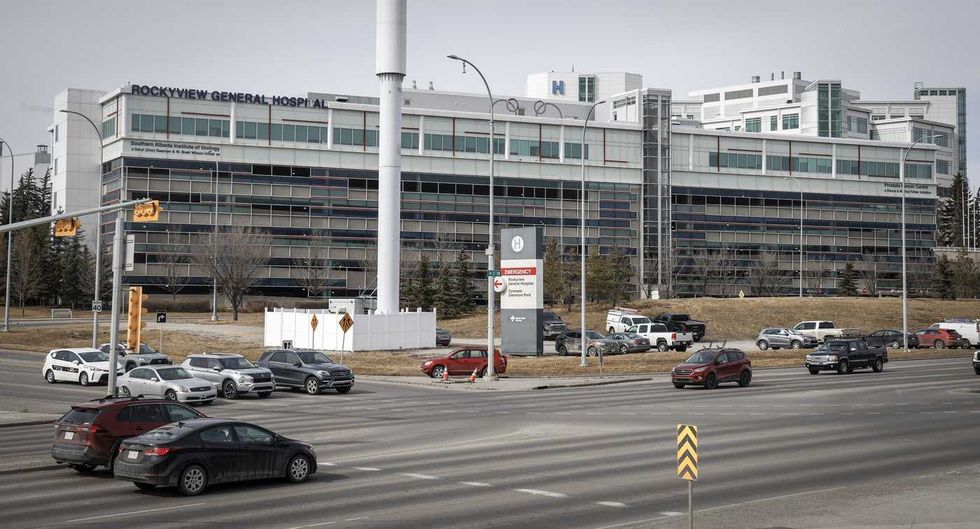 The Rockyview General Hospital is pictured in Calgary, Thursday, March 20, 2025.
THE CANADIAN PRESS/Jeff McIntosh
The Rockyview General Hospital is pictured in Calgary, Thursday, March 20, 2025.
THE CANADIAN PRESS/Jeff McIntosh This composite image shows, left to right, B.C. NDP Leader David Eby in Vancouver, on April 13, 2026; B.C. Conservative interim Leader Lorne Doerkson, in Vancouver, on Sept. 22, 2026; B.C. Green Party Leader Emily Lowan in Victoria, on Sept. 23, 2026.
THE CANADIAN PRESS/Darryl Dyck, Rich Lam, Kevin Light
This composite image shows, left to right, B.C. NDP Leader David Eby in Vancouver, on April 13, 2026; B.C. Conservative interim Leader Lorne Doerkson, in Vancouver, on Sept. 22, 2026; B.C. Green Party Leader Emily Lowan in Victoria, on Sept. 23, 2026.
THE CANADIAN PRESS/Darryl Dyck, Rich Lam, Kevin Light