



You Could Go To Jail For Tax Evasion In Canada & Here's What To Be Aware Of At Tax Time
There are a number of pretty serious consequences for those convicted.💰
There are few scarier words in the world of money than "tax evasion" and the Canada Revenue Agency (CRA) is, understandably, incredibly strict about it.
While you may not have been taught about it in your school days, knowing what is and what isn't considered to be tax evasion – and what happens to you if you get caught doing it – are an important part of being a tax-paying Canadian.
According to the CRA, there are a bunch of offences that could see you face tax evasion charges, including inflating your expenses, fraudulently claiming a benefit or purposely not reporting your full income.
What's more, the consequences for those who are convicted are pretty serious. Those found guilty could face hefty fines, lengthy jail sentences, and even fingerprinting and foreign-travel restrictions.
Here's a look at everything you should know about tax evasion in Canada – and how to ensure you don't inadvertently end up in trouble with the law.
What is tax evasion?
There are a few deliberate acts that the CRA considers to be tax evasion or tax fraud, which according to UFile.com tax expert Gerry Vittoratos, are "one in the same."
Tax evasion is when you use deceitful means to hide, understate or falsify your income and expenses to owe less in taxes.
This can be done through falsifying records and claims, purposely not reporting income, inflating expenses, claiming a fraudulent refund or benefit and much more.
It also includes getting involved in offshore tax schemes and promoting ways to evade taxes in Canada.
"You can clearly see the 'fraud' aspect of tax evasion in the definition above," explained Vittoratos. "The individual knows what the laws are and is willfully contravening them."
What is tax avoidance?
Tax avoidance is described by the CRA as a way of doing your taxes "that is inconsistent with the overall spirit of the law."
That means – while you're not technically breaking the law by reducing your tax payment – you are finding workarounds that contravene the point of the law.
"The [CRA]'s interpretation of the term 'tax avoidance' includes all unacceptable and abusive tax planning," Vittoratos told Narcity. "Aggressive tax planning refers to arrangements that 'push the limits.'"
"For example, the law might not clearly stipulate in the text that a certain tax planning scheme implemented by an individual cannot be undertaken," he explained.
"However, this does not mean that the CRA won’t contest the tax planning scheme if it judges that it circumvents the object of the law."
What are the consequences of tax evasion?
Needless to say, the consequences of being convicted for tax evasion or tax avoidance are pretty serious.
If you're found guilty of a financial crime you'll need to pay up. You'll be forced to pay what you owe to the CRA, plus any interest or "civil penalties" assessed by the government body.
But, it doesn't end there.
Depending on the situation, you could be fined 200% of what you didn't pay, or you could be tossed in jail for up to five years.
As for tax evasion and tax fraud? They come with an even heftier punishment. Those convicted of the criminal charge of tax fraud could be put into jail for up to 14 years.
You could also be in the fingerprint database and you could face restrictions on international travel. Yikes!
The CRA says that between April 2017 and March 2022, 119 years of prison time had been dolled out, $17 million in fines were sent out and 140 taxpayers had been convicted of a financial crime.
The agency also has resources for Canadians to report tax evasion and fraud, as well as schemes that facilitate anonymous reports.
And, if all this talk about tax has you looking ahead to your 2023 tax filing, these expert tips could help you get even more prepared for the year ahead. Good luck, taxpayers!
 Acute Care Alberta CEO Dr. Sayeh Zielke speaks as Major-General L.W. Rutland listens during a press conference following a fatal incident at CFB Wainwright in Alberta, in Edmonton, Sunday, Oct. 18, 2026.
THE CANADIAN PRESS/James Maclennan
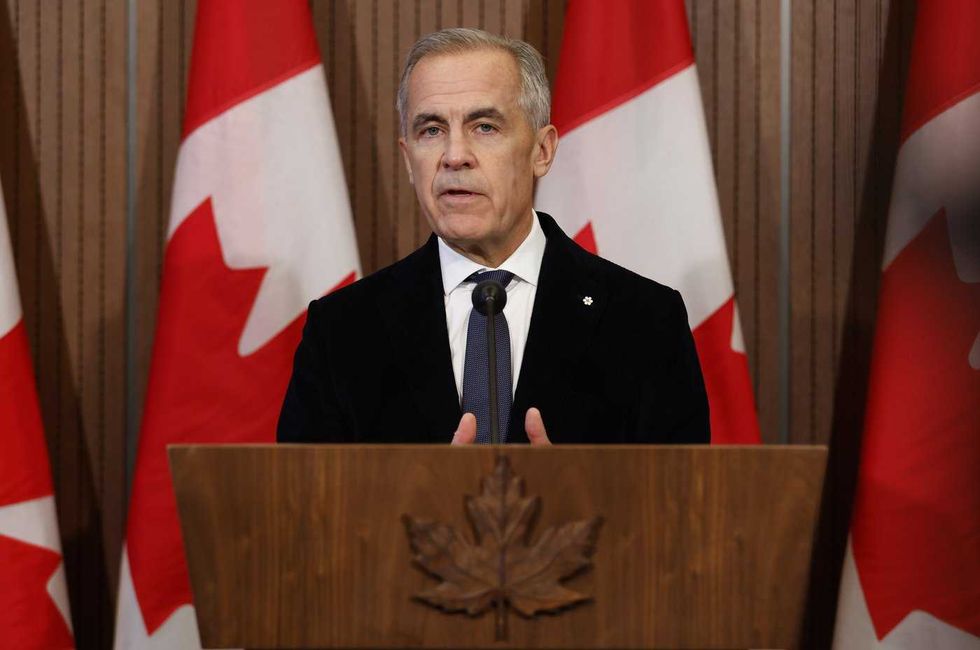 Prime Minister Mark Carney delivers a statement on Parliament Hill following a deadly fire at Canadian Forces Base Wainwright in Alberta, in Ottawa on Sunday, Oct. 18, 2026.
THE CANADIAN PRESS/Patrick Doyle
 Fire crews work the burn area on CFB Wainwright south of the town Wainwright Alta., on Sunday, Oct. 18, 2026. Four people have been killed and numerous others injured.
THE CANADIAN PRESS/John Ulan
 Prime Minister Mark Carney speaks as Alberta Premier Danielle Smith listens in Fort McMurray on Thursday Oct. 1, 2026. Prime Minister Mark Carney declared the Pacific Link pipeline project to be in the national interest.
THE CANADIAN PRESS/Greg Halinda
 A person pumps fuel in Toronto after gasoline prices rose overnight on Wednesday, Sept. 12, 2012.
THE CANADIAN PRESS/Michelle Siu
 A group of allied New Brunswick residents opposing what could be the first hyperscale data centre in Atlantic Canada say theyâve uncovered a proposal for a second, smaller one nearby. People in opposition to AI data centres demonstrate outside the council chambers at city hall in Hamilton, Wednesday, July 15, 2026.
THE CANADIAN PRESS/Nick Iwanyshyn
 Meta CEO Mark Zuckerberg speaks during the Meta Connect conference, Wednesday, Sept. 23, 2026, in Menlo Park, Calif. (AP Photo/Jeff Chiu)